
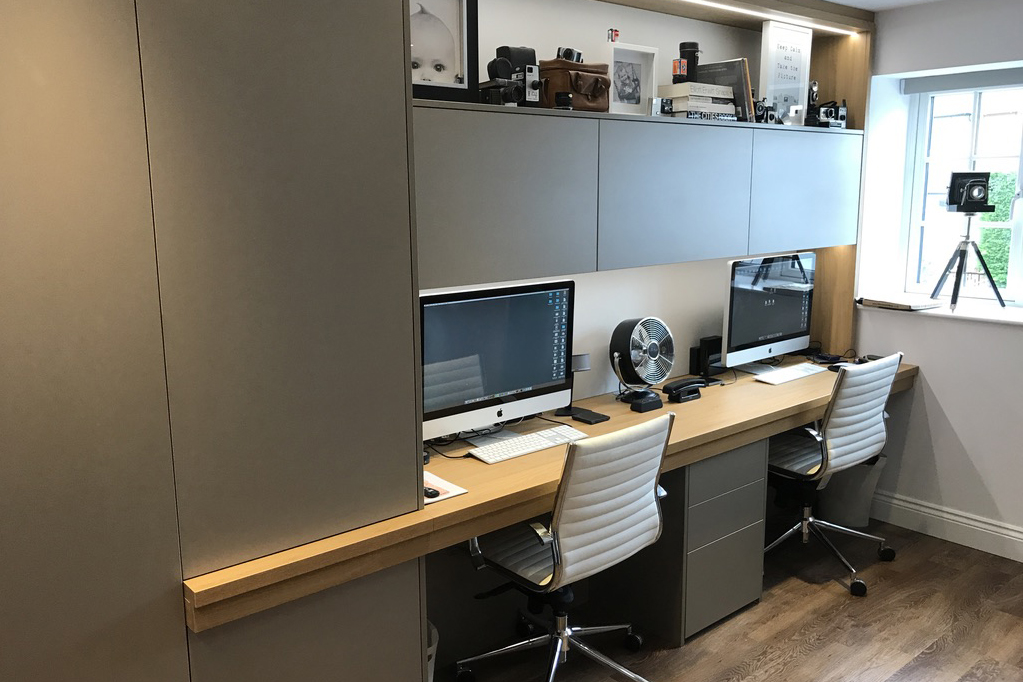
Working from home sounds simple until you actually try to focus for eight hours a day in a space that was never designed for work. A wobbly desk, a stiff dining chair, or a workspace crammed into a corner can quietly drain your energy and concentration far more than most people realize.
Home office furniture isn’t just about having a place to put a laptop. It’s about creating a physical environment that supports long hours of focused work without wrecking your posture, energy, or motivation. Here’s how to actually get it right.
Why Most Home Workspaces Fail
Most home office setups aren’t planned — they evolve. A laptop ends up on a dining table, then a spare chair gets pulled in, then a lamp gets added because the lighting is bad. The result is a workspace built from leftovers rather than designed with intention.
The problem is that furniture never built for long work sessions creates constant micro-discomforts: a chair without lower back support, a desk too low for proper wrist position, harsh overhead lighting causing eye strain. None of these feel like a big deal in the moment, but stacked across an eight-hour day, they quietly reduce focus and increase fatigue.
The Desk: Function Over Aesthetics
A desk is the foundation of any home office, and its size, height, and surface matter more than its style.
Size: A desk that’s too small forces clutter, which increases visual distraction. As a general guide, a minimum depth of 60 cm and width of 120 cm gives enough room for a laptop, monitor, and a clear surface for notes or documents without feeling cramped.
Height: Standard desk height (around 73–75 cm) works for most people, but if you’re notably taller or shorter than average, an adjustable-height desk removes the guesswork and allows proper elbow alignment.
Surface: Matte finishes reduce glare from screens and windows compared to glossy surfaces, which can cause eye strain over long sessions.
Standing desks: Not essential, but genuinely useful for anyone sitting for most of the day — alternating between sitting and standing has been linked to reduced fatigue and improved focus during long work sessions.
The Chair: The Single Most Important Purchase
If there’s one piece of furniture worth spending more on, it’s the chair. You’ll spend more consecutive hours in it than almost any other piece of furniture you own, and a poor chair has a direct, cumulative effect on posture, back pain, and energy levels.
Look for:
- Adjustable seat height so your feet can rest flat on the floor with knees at roughly 90 degrees.
- Lower back (lumbar) support, either built-in or added separately, to maintain the spine’s natural curve.
- Adjustable armrests that let your shoulders relax rather than hunch upward or outward.
- Breathable material — mesh or woven fabric prevents heat buildup during long sitting sessions compared to solid foam or leather.
A dining chair or decorative accent chair might look fine in a home office photo, but without these features, it becomes a slow, steady source of discomfort during real workdays.
Storage: Reduce Visual Noise, Not Just Clutter
A cluttered desk doesn’t just look messy — it actively competes for your attention. Every visible object your eyes land on is a tiny distraction pulling focus away from the task at hand.
- Closed storage (drawers, cabinets) hides everyday clutter better than open shelving for maintaining a clean visual field while working.
- A dedicated document tray or organizer keeps papers from accumulating directly on the work surface.
- Cable management solutions (trays, clips, or a simple box) remove one of the most common sources of visual clutter in home offices — tangled cords.
The goal isn’t a minimalist showroom desk. It’s a desk where nothing pulls your eyes away from the actual work in front of you.
Lighting Furniture: Often Ignored, Highly Impactful
Lighting isn’t traditionally thought of as “furniture,” but the right lighting fixtures matter as much as the desk and chair for sustained focus.
- Position the desk near natural light when possible — but avoid direct glare on the screen, which increases eye strain.
- Add a dedicated task lamp with adjustable brightness for days with limited natural light or evening work sessions.
- Avoid relying solely on harsh overhead lighting, which tends to increase eye fatigue during screen-heavy work compared to a mix of ambient and task lighting.
Layout: Where You Place the Desk Matters More Than You Think
Even the best desk and chair can underperform if placed poorly within a room.
- Face away from high-traffic areas like doorways or hallways where household movement constantly enters peripheral vision — this creates ongoing subtle distraction.
- Avoid facing a wall directly, if possible; a slight view of the room (without facing a TV or bed) tends to feel less isolating during long work sessions.
- Keep a visual boundary between work and rest, especially in small apartments. Even a bookshelf, screen divider, or simply angling the desk away from the bed can help your brain mentally separate “work mode” from “rest mode.”
Small Furniture Additions That Make a Bigger Difference Than Expected
- A footrest for anyone whose desk height doesn’t perfectly match their chair — improves circulation and reduces leg fatigue.
- A monitor stand or riser to bring screen height to eye level, reducing neck strain from looking down at a laptop for hours.
- A small side table for coffee, water, or notes, keeping the main desk surface clear for actual work.
Budget Priorities: Where to Spend, Where to Save
If budget is limited, prioritize spending in this order:
- Chair — directly affects posture and comfort every single day.
- Desk stability and size — a wobbly or undersized desk undermines everything else.
- Lighting — a genuinely underrated productivity factor for the cost involved.
- Storage and accessories — helpful, but the least urgent if budget is tight.
A high-quality chair paired with a simple, stable desk will outperform an expensive designer desk paired with an uncomfortable chair almost every time.
Final Thoughts: Design the Workspace, Not Just the Desk
A home office isn’t just a desk with a laptop on it — it’s an entire micro-environment that either supports your focus or quietly works against it. The furniture you choose determines how your body feels after a full workday and how easily your mind can stay on task without constant small distractions pulling it away.
Investing a little more thought — and where possible, budget — into a proper chair, a stable desk, decent lighting, and a distraction-free layout pays off far more than most people expect, often making the difference between a workspace you dread and one you can actually focus in.
