
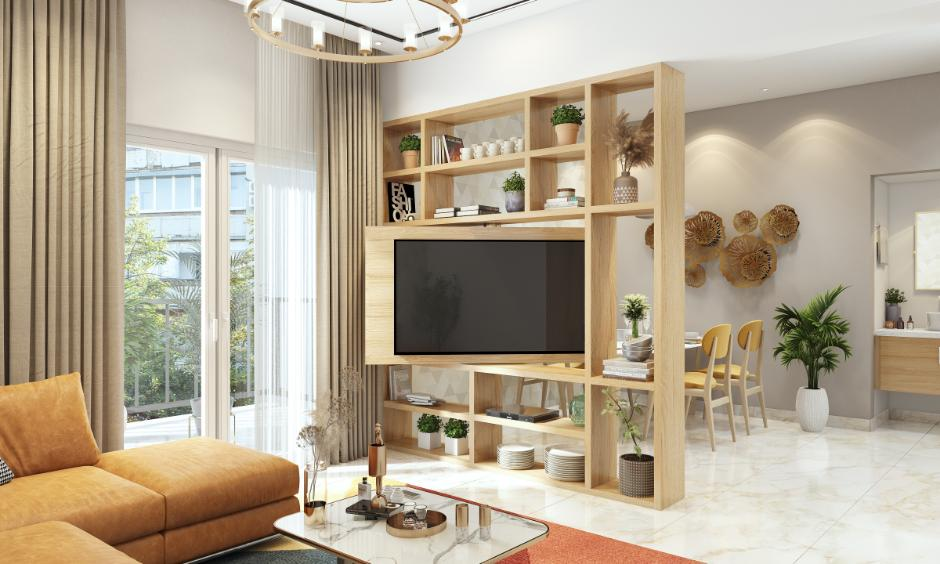
Apartments are shrinking, remote work isn’t going anywhere, and rent keeps climbing in most major cities — so it’s no surprise that multifunctional furniture has become one of the defining furniture trends of 2026. Instead of squeezing a separate sofa, desk, bed, and storage unit into a single room, homeowners are turning to furniture that does two or three jobs at once. It’s not a compromise anymore; it’s become the smarter, more design-forward way to furnish a small space.
Here’s a full breakdown of why this trend has taken off, the specific pieces leading the category, and how to shop for multifunctional furniture without ending up with something that looks — or feels — cheap.
Why Multifunctional Furniture Is Having a Moment
The math behind this trend is straightforward. The average size of new urban apartments has shrunk by roughly 10–15% over the past decade in major metropolitan cities, while remote and hybrid work has driven a more than 35% increase in demand for flexible interior layouts. Put those two trends together, and you get a huge number of people trying to fit a living room, home office, guest room, and storage space into a single footprint.
Multifunctional furniture solves this by combining what used to be separate pieces — a sofa, a bed, a desk, a storage unit — into a single structure. It’s sometimes called modular furniture, smart furniture, or space-saving furniture, but the core idea is the same: fewer individual pieces, more flexibility, and a room that can shift purpose throughout the day.
The Trends Defining Multifunctional Furniture in 2026
Convertible Sofa Beds, Reimagined
The sofa bed isn’t new, but the 2026 versions are far more refined than the fold-out futons of the past. Modern sofa-cum-bed designs now function as a comfortable sofa during the day, a recliner in the evening, and a full-sized bed at night — all without the lumpy mattress bar that made older versions a running joke. For anyone hosting guests occasionally without a dedicated guest room, this remains one of the highest-value pieces in the category.
Subtle, Built-In Storage
One of the clearest small-space trends for 2026 isn’t a specific furniture type — it’s an approach. Designers are describing “subtle storage” as a defining trend in small apartments this year, where storage is worked directly into furniture rather than added as a separate unit. Sofas with hidden storage under the cushions, ottomans that double as storage bins, and stacked appliances all reflect this same idea: storage that doesn’t visually compete with the room around it.
Lift-Top and Expandable Tables
Coffee tables and dining tables are quietly becoming some of the hardest-working pieces in a small home. Lift-top coffee tables that rise to desk height are popular for turning a living room into a functional workspace without a dedicated office, while expandable dining tables let a two-person table grow to seat guests only when needed. These pieces are especially useful for studio apartments, where a single table often has to serve as a desk, a dining spot, and a coffee table depending on the time of day.
Murphy Beds and Foldaway Furniture
Wall beds have made a genuine comeback as apartment sizes shrink. A well-designed Murphy bed can fold away completely during the day, freeing up an entire room for work or entertaining — a dramatic upgrade from having a bed permanently taking up floor space in a studio apartment. Foldable wall-mounted desks follow the same logic, folding flat against the wall when not in use.
Integrated Charging and Smart Features
Multifunctional furniture is increasingly overlapping with the smart furniture trend, with charging ports, USB outlets, and even wireless charging pads built directly into nightstands, sofa arms, and coffee tables. The goal isn’t flashy technology — it’s reducing the number of separate accessories (chargers, lamps, side tables) crowding a small room.
Modular Systems That Grow With You
Rather than buying a fixed sectional or dining set, more shoppers are choosing modular systems that can be reconfigured or expanded as their household changes. A modular sofa might start as a loveseat in a studio apartment and expand into a full sectional after a move to a bigger space — a meaningful shift for renters and first-time apartment owners who don’t want to replace furniture every time their living situation changes.
Sustainable Materials in Compact Furniture
Multifunctional furniture is also picking up the broader sustainability trend running through the rest of the furniture industry. Buyers are increasingly looking for space-saving pieces built from sustainable materials, reflecting a shift toward furniture that’s not just efficient with space but also built to last rather than replaced every time a trend cycle turns over.
The Real Failure Point: Quality vs. Gimmick
Not all multifunctional furniture is created equal, and the category has a reputation problem worth acknowledging. A meaningful share of multifunctional furniture on the market looks fine in product photos but arrives feeling flimsy, with a “second function” that seems bolted on as an afterthought rather than genuinely engineered. A convertible sofa that wobbles when a guest leans on the armrest isn’t actually saving space — it’s creating a different problem.
The pieces worth buying tend to share a few traits: the second function deploys quickly and smoothly (ideally in well under a minute), the construction feels solid in both configurations, and the design doesn’t scream “space-saving gimmick” the moment you look at it closely.
How to Shop Multifunctional Furniture Without Getting Burned
- Test the transformation, not just the look. Whether it’s a sofa bed, lift-top table, or Murphy bed, the ease and speed of switching functions matters more than how it photographs in one static position.
- Prioritize weight capacity and hardware quality. Cheap hinges, weak frames, and thin mattress foam are the most common failure points in convertible furniture — check reviews specifically for how a piece holds up after months of daily use, not just first impressions.
- Measure both configurations. A sofa bed or expandable table needs enough clearance in both its compact and expanded states — measure your room for both, not just the smaller footprint.
- Don’t over-multitask a single piece. A coffee table that’s also a desk that’s also a dining table sounds efficient, but stacking too many functions onto one item often means it does none of them particularly well. One or two functions per piece tends to hold up better long-term.
- Buy for your actual routine. A Murphy bed only makes sense if you’re genuinely willing to fold it up daily. If that’s not realistic for your lifestyle, a storage bed frame might solve the same space problem with less friction.
Frequently Asked Questions
Is multifunctional furniture worth it for small apartments? Generally yes, especially for studios and one-bedroom apartments where a single room needs to serve multiple purposes. The key is choosing well-built pieces rather than the cheapest option with a gimmicky second function.
What’s the most popular multifunctional furniture piece in 2026? Convertible sofa beds and lift-top coffee tables are among the most widely adopted picks, largely because they solve two common small-space problems — seating/sleeping and workspace — without requiring separate furniture.
Are Murphy beds still practical in 2026? Yes, especially in studio apartments where floor space is at a premium. Modern Murphy beds are easier to fold and unfold than older versions, making daily use far more realistic than it used to be.
Final Thoughts
Multifunctional furniture in 2026 has moved well past the folding futon and flimsy storage ottoman of years past. Between refined convertible sofas, smarter storage integration, and modular systems that can grow with a household, small-space living no longer means sacrificing comfort or style. The key to shopping this trend well is simple: prioritize pieces where the second function feels engineered, not bolted on — because in a small space, furniture that fails at its second job doesn’t just look bad, it costs you the square footage you were trying to save in the first place.
