
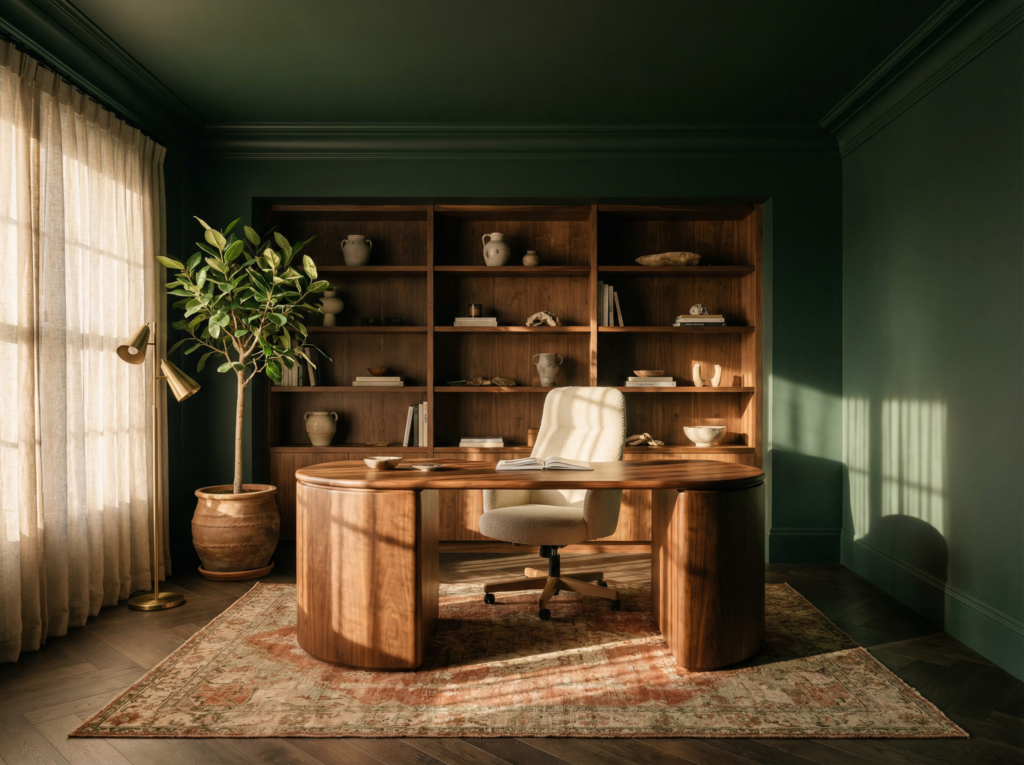
The corner desk with a metal frame and a folding chair had its moment, but that moment has passed. As hybrid work settles in as the norm rather than the exception, home offices are being treated less like a hastily converted spare room and more like a genuine part of the home — one that needs to look good on video calls, hold up to eight-hour workdays, and still feel like it belongs next to the living room. Furniture is catching up fast.
Here’s what’s actually shaping home office furniture in 2026, and how to apply it whether you’re furnishing a full room or just upgrading a desk in the corner.
The Home Office Furniture Market Is Maturing
The pandemic-era rush to buy any desk that would fit in a spare bedroom is well behind us. The US home office furniture market is projected to reach roughly $6.94 billion in 2026, up from about $6.5 billion the year before — a steady 6.7% year-over-year increase that reflects a shift from emergency purchases toward a more deliberate replacement cycle. Consumers are now prioritizing ergonomics, durability, and design that fits the rest of their home, rather than grabbing whatever desk was available during the initial shift to remote work.
This maturity has given rise to a design philosophy some in the industry call “resimercial” — furniture that combines commercial-grade durability standards with the aesthetics of residential design, so a chair rated for eight-plus hours of daily use no longer has to look like it came from a corporate cubicle.
1. Warm Materials Replace Cold, Corporate Finishes
The biggest visual shift in home office design this year is a move away from white laminate desks and metal frames toward warmer, more natural materials. Wood finishes, soft neutral walls, and textured fabrics are becoming the new standard, creating a workspace that feels like part of the home rather than a leftover office cubicle. Many homeowners are specifically investing in solid wood office furniture, valued for the depth, durability, and reduced visual fatigue it offers over long work sessions compared to cold metal and laminate finishes.
This warmth extends to seating, too. Bouclé desk chairs are increasingly replacing mesh, brass hardware is standing in for chrome, and layered lighting is taking over from a single harsh overhead fixture — small swaps that add up to a noticeably less clinical space.
2. Technology Goes Invisible
Home offices are more device-heavy than ever, but the furniture is finally catching up in how it handles that reality. Rather than cords and chargers cluttering a desktop, outlets are being recessed directly into work surfaces and matched to the material finish, while wireless charging is built into the writing surface itself, often marked by nothing more than a subtle shift in sheen. Desks with concealed cable channels, pop-up power outlets, and credenzas with ventilated, built-in charging stations are helping keep both cords and clutter out of sight.
The goal isn’t fewer devices — it’s a workspace where the technology supports the work without visually dominating the room.
3. Ergonomics Everywhere
Comfort has moved from a nice-to-have to a baseline expectation. Adjustable-height desks and supportive chairs remain the foundation, but posture sensors, customizable lumbar support, and integrated footrests are becoming increasingly mainstream additions rather than premium upgrades. The payoff is measurable: research on ergonomic furniture suggests that investing in properly designed seating and desks can increase productivity by roughly 17% while reducing musculoskeletal issues.
Some setups are pushing this further with movement-focused additions like under-desk treadmills and balance boards, reflecting a broader wellness push that treats the home office as a space that should support the body, not just the workday.
4. Zoned, Multi-Purpose Layouts
A single desk is no longer considered a complete home office setup. Instead, spaces are increasingly divided into distinct zones — a primary desk for focused work, a secondary seating area for reading or calls, and sometimes a standing or movement zone. This layout shift isn’t purely aesthetic: people who add a secondary seating area to their home office often report better focus and reduced fatigue, since it allows for a genuine change of position and scenery without leaving the room.
5. Modular, Reconfigurable Storage
Traditional filing cabinets are giving way to modular storage that can adapt as needs change. Rolling pedestals that double as under-desk storage or side tables, wall-mounted shelving with movable brackets, and storage ottomans are replacing the fixed, boxy storage furniture of past decades. Mobile pieces on casters add another layer of flexibility, letting a workspace shift quickly from solo focused work to a more open, collaborative setup when needed.
6. Artisan and Handcrafted Pieces
As sustainability and individuality continue to shape furniture buying more broadly, that trend has reached the home office too. More consumers are prioritizing handcrafted, artisan-made furniture over mass-produced alternatives, drawn to the durability and unique character that comes from traditional craft methods. A commissioned desk from a local woodworker, for example, carries construction quality and grain detail that mass production can’t replicate — and tends to hold up through career changes and workspace reconfigurations far better than flat-pack alternatives.
7. Video-Call-Ready Design
With video calls now a permanent fixture of hybrid work, furniture and layout decisions increasingly account for how a space reads on camera. Curated backgrounds are being treated as part of the room’s architecture rather than an afterthought, with furniture and decor arranged deliberately so they read clearly through a webcam lens. Digital frames and curated art collections are also gaining popularity as a way to add visual interest to a home office background without cluttering the physical space.
8. Personalized Color and Mood
Home offices in 2026 are leaning into color psychology rather than defaulting to all-white minimalism. Designers are pairing calming palettes with targeted accent tones depending on the type of work a space needs to support — warmer hues for creative work, cooler tones for more analytical tasks. This shift reflects a broader move away from the stark, all-white home office toward something that feels more personal and tailored to how a specific person actually works.
How to Build a Smarter Home Office Setup
- Invest in one high-quality anchor piece. A solid wood desk or a well-made chair with real ergonomic support does more for the room — and your body — than a handful of smaller accessories.
- Hide the tech, don’t hide from it. Look for desks with built-in cable management or charging rather than trying to work around a tangle of cords with add-on organizers.
- Add a secondary zone if you have the space. Even a small reading chair or lounge spot can meaningfully reduce fatigue by giving you somewhere else to sit during the day.
- Choose warm materials over cold ones. Swapping a metal-frame desk for a wood one, or a mesh chair for a upholstered one, does a lot to make the space feel like part of your home rather than a leftover cubicle.
- Think about how it looks on camera. If video calls are a regular part of your workday, arrange your background with the same intention you’d give the rest of the room.
Frequently Asked Questions
What is “resimercial” office furniture? It’s a design approach that combines commercial-grade durability, like BIFMA-rated chairs built for all-day use, with residential-style aesthetics, so home office furniture holds up like commercial furniture but looks like it belongs in a home.
Are standing desks still worth it in 2026? Yes — height-adjustable desks remain one of the most consistently recommended home office investments, supporting movement throughout the day and helping reduce the health risks associated with prolonged sitting.
What colors work best in a home office? It depends on the type of work you do most. Warmer tones tend to support creative work, while cooler tones are often better suited to focused, analytical tasks — many designers now recommend choosing a palette based on function rather than following a single trending color.
Final Thoughts
Home office furniture in 2026 has fully moved past the “spare bedroom with a desk” era. Between warmer materials, invisible tech integration, genuine ergonomic investment, and layouts built around how people actually work, the modern home office is being designed with the same intention as any other room in the house. Whether you’re starting from scratch or upgrading piece by piece, the throughline across every trend this year is the same: a workspace that supports how you work without looking or feeling like an office at all.
