
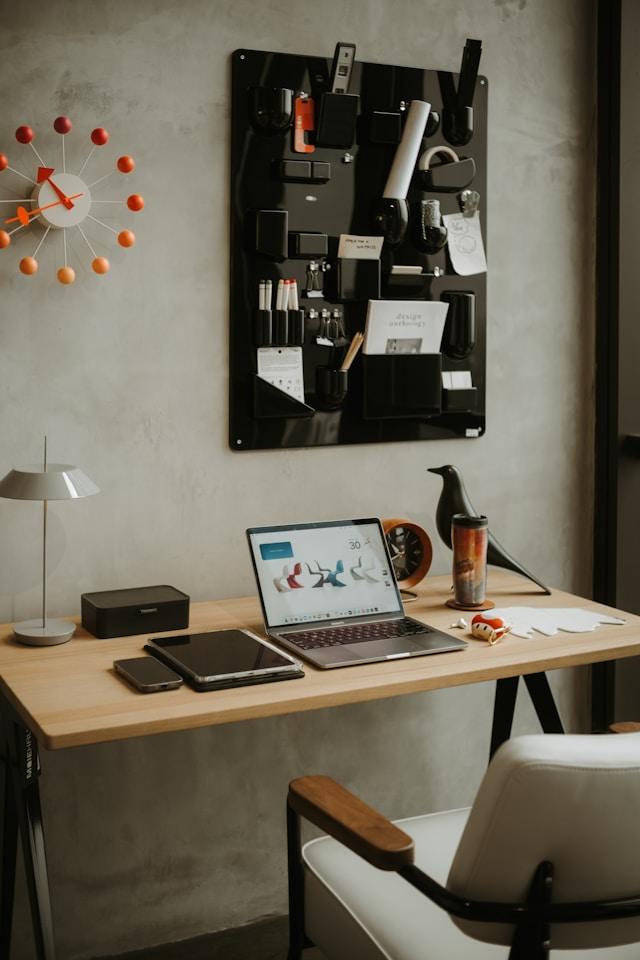
1. Warm Wood Tones Replace Cold, Corporate Materials
The biggest visual shift in home office design this year is a move away from white laminate desks and metal frames toward materials that feel more natural and calming. Wood finishes, soft neutral walls, and textured fabrics are becoming the new standard, creating a workspace that feels less like an office and more like a genuine part of the home. Many homeowners are investing in solid wood office furniture specifically because it adds depth, durability, and a premium feel — and designers note it can also help reduce visual fatigue during long stretches of work.
2. Ergonomics as a Baseline, Not a Luxury
Adjustable desks and supportive chairs remain home office staples in 2026, but the bar has risen. Integrated posture sensors, customizable lumbar support, and built-in footrests are becoming mainstream features rather than premium add-ons. Height-adjustable desks in particular are increasingly viewed as standard equipment, supporting movement throughout the workday and helping counter the health effects of prolonged sitting. Research on ergonomic furniture suggests that properly designed seating and desks can meaningfully boost productivity while reducing musculoskeletal strain, which is helping justify the investment for more households.
3. Furniture That Absorbs Technology
Cluttered cords and visible tech are out in 2026. Desks with built-in wireless charging pads, concealed cable channels, and pop-up power outlets are keeping surfaces clear and cords contained. Outlets are increasingly recessed directly into desktops and matched to the surrounding material, while task lighting is integrated along shelf undersides rather than added as a separate fixture. The goal is technology that’s fully accessible but effectively invisible — a home office that doesn’t look like it’s plugged into anything at all.
4. Modular Storage Over Traditional Filing Cabinets
Bulky, static filing cabinets are being phased out in favor of modular, reconfigurable storage. Rolling pedestals that double as side tables, wall-mounted shelving with moveable brackets, and ottomans with hidden storage are all replacing fixed storage solutions. Furniture on casters is a particularly popular choice, since it allows a workspace to quickly shift from focused solo work to a more open, collaborative setup for client calls or project work without needing to rearrange the entire room.
5. Zoned, Multi-Purpose Layouts
A single desk is no longer considered enough for how people actually work in 2026. Home offices are increasingly divided into distinct zones — a primary desk for focused work, a secondary seating area for calls or reading, and sometimes a standing or movement-friendly zone. This layout approach improves both productivity and comfort by allowing people to move throughout the day rather than staying anchored to one chair, and many users report better focus and less fatigue once a secondary seating area is added.
6. Warm Minimalism Over Stark, All-White Design
The ultra-minimalist, all-white home office is fading in 2026. In its place is what designers are calling “warm minimalism” — clean lines and uncluttered spaces, but layered with texture, warmth, and personality. Bouclé desk chairs are replacing mesh, brass hardware is replacing chrome, and layered, warm-toned lighting is replacing a single harsh overhead fixture. The result is a workspace that still feels organized and professional, but noticeably more inviting than the sterile home offices of recent years.
7. Artisan and Handcrafted Furniture
Handcrafted, artisan furniture is gaining real prominence in 2026 home offices, as more consumers prioritize unique, well-made pieces over mass-produced alternatives. A desk commissioned from a local woodworker carries tool marks and grain patterns that machine production simply can’t replicate, while its solid construction promises to hold up through career changes and workspace reconfigurations. This trend ties closely to the broader sustainability movement, since well-built, handcrafted furniture functions as a long-term investment rather than a disposable purchase.
8. Video-Call-Ready Backgrounds and Lighting
With video calls still a near-daily part of hybrid work, home office furniture in 2026 is increasingly designed with the camera view in mind. Curated backgrounds — bookshelves, art, layered greenery — are treated as part of the room’s architecture rather than an afterthought, composed with deliberate spacing so the arrangement reads clearly on screen. Furniture manufacturers are responding with modular back panels and integrated storage designed specifically to look polished during video calls, alongside lighting fixtures tuned to flattering color temperatures for on-camera work.
9. Color Psychology in Furniture and Decor
Home office design in 2026 is increasingly informed by color psychology, with designers choosing palettes based on the type of work the space needs to support. Warmer hues are used to encourage creative work, while cooler tones are favored for analytical or detail-focused tasks. This extends beyond wall color into furniture and accent choices, with upholstery, desk finishes, and decor selected to help set the right mental tone for the work being done in that space.
10. Furniture That Blends Into the Rest of the Home
Rather than treating the home office as a separate, purely functional room, 2026 trends favor furniture that looks equally at home in shared living spaces. Multi-purpose desks, credenzas, and storage pieces are designed to blend seamlessly into a living room or bedroom’s overall design, which is especially valuable in smaller homes where a dedicated office room isn’t an option. This approach treats the home office less as a corporate cubicle dropped into the house and more as a fully integrated, personal part of how the home functions.
What’s Falling Out of Style in Home Offices This Year
A few once-common home office choices are losing ground in 2026:
- White laminate desks with metal frames — replaced by warm wood tones and natural materials that feel calmer and more residential.
- Traditional filing cabinets — giving way to modular, mobile storage that adapts as needs change.
- All-white, ultra-minimalist offices — replaced by warm minimalism that layers in texture and personality.
- Mesh desk chairs and chrome hardware — increasingly swapped for bouclé upholstery and brass accents that feel warmer and more residential.
Frequently Asked Questions About 2026 Home Office Furniture Trends
What is the biggest home office furniture trend for 2026? The shift toward warm, natural materials — particularly solid wood desks and furniture — over cold, corporate finishes is widely considered the defining home office trend of 2026.
Are standing desks still trending in 2026? Yes. Height-adjustable desks are increasingly viewed as standard equipment rather than a premium upgrade, reflecting a broader focus on ergonomics and movement throughout the workday.
What furniture materials are popular for home offices in 2026? Solid wood, bouclé upholstery, and brass hardware are among the most popular materials in 2026, replacing the white laminate, mesh, and chrome finishes common in previous years.
Do I need more than one desk zone in my home office? Not necessarily, but 2026 trends favor zoned layouts with a primary desk and a secondary seating area, since many people report better focus and less fatigue when they can move between work zones throughout the day.
Is technology visible in 2026 home office design? Generally, no. A defining trend for 2026 is concealed technology — recessed outlets, built-in wireless charging, and hidden cable management — designed to keep workspaces looking clean and clutter-free.
Final Thoughts
Home office furniture in 2026 reflects how permanently remote and hybrid work have reshaped the modern home. This year’s trends move firmly away from the sterile, corporate-cubicle aesthetic of early work-from-home setups and toward spaces that feel genuinely integrated into daily life — warm, comfortable, and personal, while still supporting real productivity through ergonomics and smart storage. Whether you’re upgrading a single desk chair or designing a dedicated workspace from scratch, prioritizing natural materials, concealed technology, and zoned comfort will keep your home office both functional and current for years to come.
For anyone starting small, the easiest entry points are also the most affordable: swap a mesh desk chair for one in bouclé or leather, add a warm-toned task lamp to replace a harsh overhead light, or introduce a single wood credenza to bring texture into an otherwise sparse room. These smaller updates can shift the entire feel of a workspace without requiring a full furniture overhaul, and they lay the groundwork for bigger investments — like a solid wood desk or an ergonomic chair — down the line.
