
Why Living Room Furniture Is Evolving
The living room has to do more than ever before — host movie nights, accommodate remote work calls, entertain guests, and provide a comfortable everyday retreat. This multi-use reality has pushed furniture design toward pieces that are as functional as they are beautiful, with an emphasis on comfort-first construction and materials that hold up to daily life.
1. Oversized, Cloud-Like Sofas
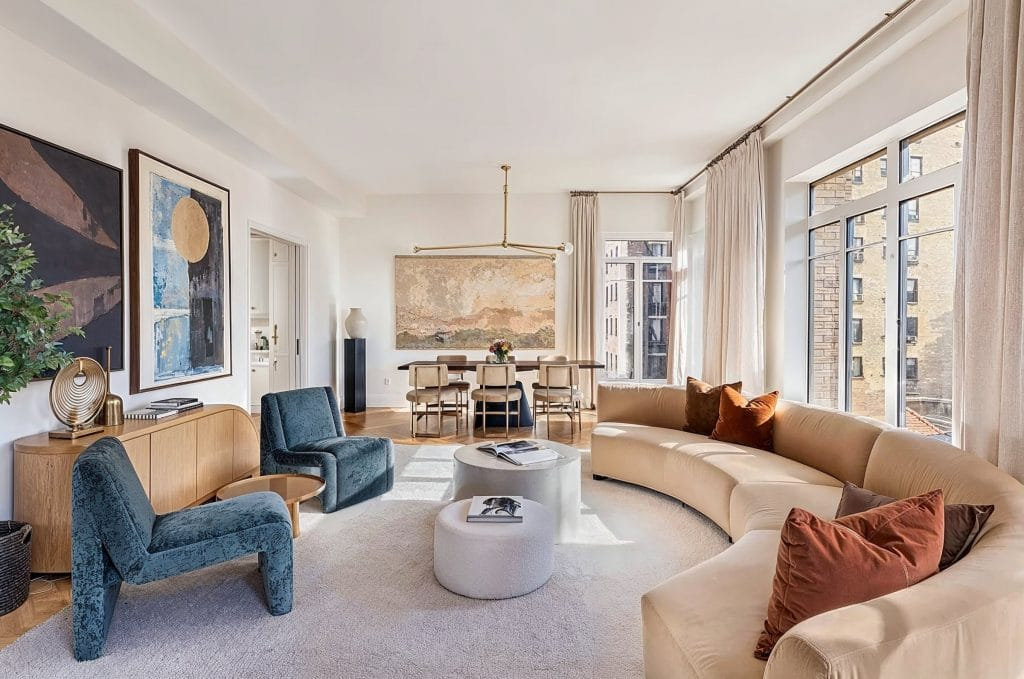
Deep-seated, plush sofas — often called “cloud sofas” — continue to dominate living room design. These pieces prioritize comfort above all else, with low arms, extra-deep seats, and soft, enveloping cushions. Modular versions allow homeowners to reconfigure the sofa as their space or needs change.
Why it works: As homes lean into a “quiet luxury” and cozy-minimalist aesthetic, comfort has become just as important as style — and oversized sofas deliver both.
2. Curved Silhouettes Throughout the Room
The curved-furniture trend extends well beyond sofas into coffee tables, accent chairs, and even shelving units. Rounded edges create a softer, more inviting atmosphere and tend to improve traffic flow in smaller or oddly shaped rooms.
3. Statement Coffee Tables
Coffee tables are increasingly treated as design centerpieces rather than purely functional surfaces. Sculptural bases in stone, travertine, or curved wood are especially popular, often paired with a simple glass or wood top to let the base shine.
4. Natural and Earthy Material Palettes
Living rooms are embracing warmer, more organic materials:
- Travertine and marble accent tables
- Rattan and cane accent chairs
- Linen and boucle upholstery
- Reclaimed or live-edge wood surfaces
This shift away from cold, industrial materials reflects a broader desire for living spaces that feel warm, textured, and grounded.
5. Flexible, Modular Seating Arrangements
As living rooms serve multiple functions throughout the day, modular seating has become a practical necessity. Sectional pieces that can be rearranged for movie nights, parties, or everyday lounging give homeowners the flexibility to adapt their space without buying new furniture.
6. Bold Accent Chairs
While sofas often lean neutral, accent chairs are where homeowners are experimenting with bold colors and patterns. Rich jewel tones, curved silhouettes, and statement fabrics like velvet or boucle allow for personality and visual interest without overwhelming the whole room.
7. Media Furniture That Hides the Tech
As televisions and sound systems remain central to most living rooms, furniture designed to conceal or minimize their visual presence is trending. This includes:
- TV consoles with closed cabinet storage instead of open shelving
- Cable management built into media units
- Furniture-integrated speaker systems that blend into consoles or shelving
The goal is a living room that feels like a design-forward space first, and an entertainment hub second.
8. Layered, Textural Rugs and Soft Furnishings
While not furniture in the traditional sense, textiles are playing a bigger role in how living room furniture is styled. Layered rugs, textured throw pillows, and chunky-knit blankets are being used to soften hard furniture lines and add warmth, particularly when paired with minimalist frames and neutral color palettes.
9. Multi-Purpose Storage Furniture
As living rooms double as play areas, home offices, or guest spaces, smart storage furniture is in high demand:
- Coffee tables with hidden storage compartments
- Console tables that convert into desks
- Ottomans with removable lids for blanket or toy storage
- Bookshelves that double as room dividers in open floor plans
10. Sustainable and Locally Sourced Furniture
Sustainability continues to influence living room furniture purchases, with buyers seeking:
- FSC-certified wood frames
- Recycled or GRS-certified upholstery fabrics
- Locally made or small-batch furniture to reduce shipping emissions
- Furniture built for longevity and repairability rather than disposability
How to Refresh Your Living Room Without a Full Renovation
- Start with the sofa — it’s the anchor piece and has the biggest visual and comfort impact.
- Add one curved element, like a coffee table or accent chair, to soften a boxy room.
- Introduce natural materials through side tables, lighting, or shelving to add warmth.
- Choose one bold accent piece rather than overhauling the entire color scheme at once.
- Prioritize flexible furniture if your living room serves multiple purposes throughout the week.
Final Thoughts
Living room furniture in 2026 reflects a broader shift toward comfort, flexibility, and natural materials — spaces designed for how people actually live, not just how a showroom looks. From oversized cloud sofas and curved silhouettes to smart storage and sustainable materials, today’s living room furniture makes it easier to build a space that feels both stylish and genuinely functional.
Whether you’re updating a single statement piece or planning a full living room redesign, these trends offer plenty of direction for creating a space your whole household will want to gather in.
