
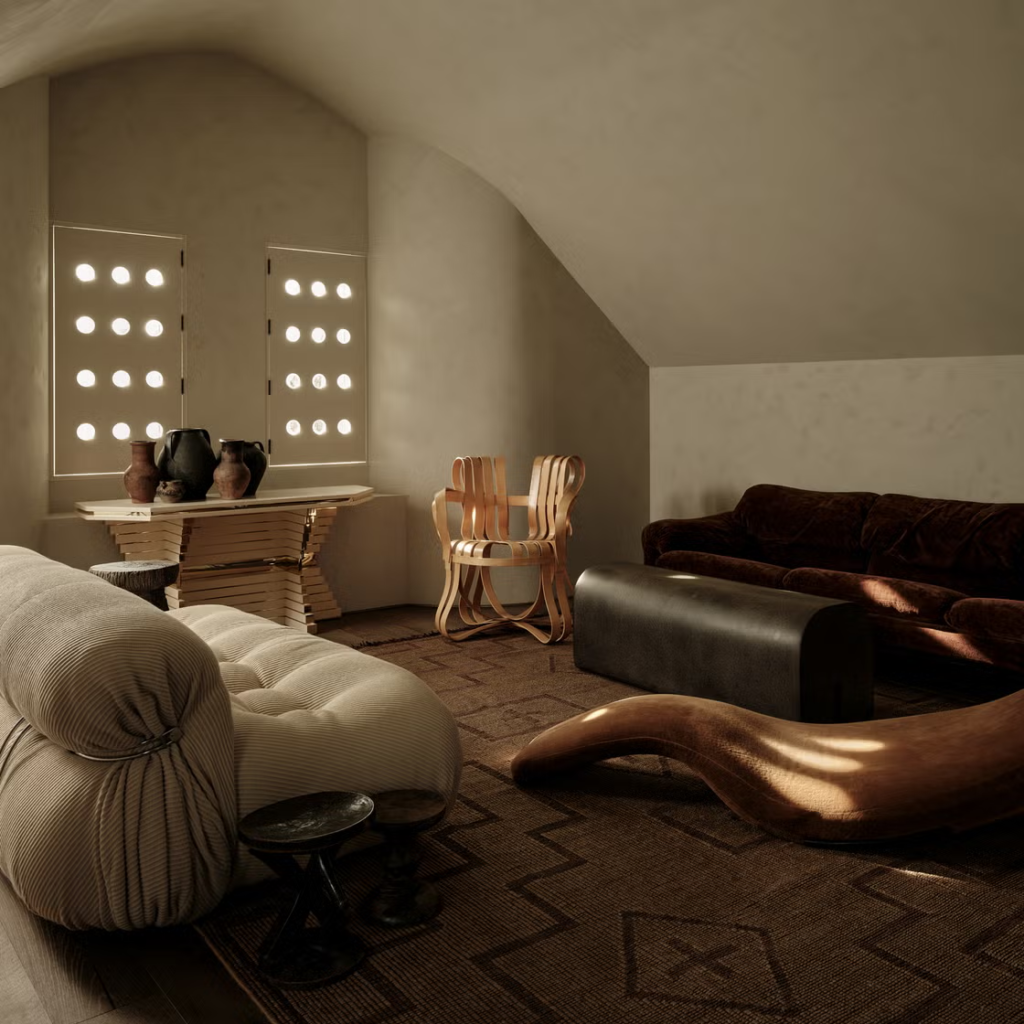
Below, we break down the eight biggest furniture trends of 2026 — from curved sofas to sustainable materials — along with the styles that are officially falling out of favor.
1. Curved and Organic Shapes Take Over
If there’s one trend defining furniture in 2026, it’s curves. Straight edges and sharp corners are giving way to soft, rounded silhouettes on sofas, chairs, coffee tables, and even bed frames. Curved sectionals and rounded armchairs are especially popular because they soften a room visually and improve the flow of open-concept layouts.
Designers describe curved furniture as more than an aesthetic choice — it’s about how the shapes make a space feel. Rounded pieces naturally draw people together, making rooms feel more conversational and less rigid than their angular predecessors. Expect to see this trend show up in everything from curved sectional sofas to oval dining tables and softly contoured nightstands.
2. Rich, Dark Woods Replace Light Finishes
Light woods like bleached oak, ash, and maple — once the darlings of Scandinavian-inspired interiors — are losing ground in 2026. In their place, richer, deeper wood tones such as walnut and mahogany are taking center stage. Designers say lighter finishes now feel flat compared to the warmth and depth of darker species.
This shift is closely tied to the rise of vintage-inspired interiors, since antique and mid-century furniture typically features these deeper, warmer wood tones. If you’re shopping for new case goods, dressers, or dining tables in 2026, look for walnut, mahogany, and other richly grained woods rather than the pale, blonde finishes that dominated the last several years.
3. Mixed Wood Tones for a Layered, Collected Look
Rather than matching every wooden surface in a room, 2026 embraces intentional mixing of wood tones. Light woods are being paired with medium and dark finishes, warm undertones balanced against cooler ones, and refined grains combined with rustic, heavily textured surfaces.
This approach adds character and depth without creating visual clutter. A single room might combine white oak flooring, walnut cabinetry, and a pine or ash accent table — and still feel cohesive rather than mismatched. In open-concept homes especially, mixed wood tones help prevent large spaces from feeling flat or monotonous. Expect this trend to keep evolving through wider plank spacing, deeper wood grooves, and unexpected material pairings like stained wood with stone or concrete.
4. Vintage Revival and Character-Driven Furniture
As homeowners seek interiors that feel personal rather than showroom-perfect, vintage and antique furniture is having a major moment in 2026. Instead of furnishing an entire home with brand-new pieces, more people are blending in reclaimed wood tables, mid-century dressers, and antique mirrors to bring warmth, craftsmanship, and history into their spaces.
This trend is driven by three main factors: sustainability, individuality, and emotional connection. Vintage furniture tends to be well-built, often more affordable than new comparable pieces, and inherently eco-friendly since it keeps existing items in circulation. Designers are pairing these older pieces with modern elements to create rooms that feel curated over time rather than purchased all at once — even a single vintage piece can become the focal point of an entire room.
5. Tactile Materials and Layered Textures
Texture is one of the most accessible and impactful furniture trends of 2026. Expect a major uptick in furniture that feels good to touch — chenille, velvet, bouclé, cotton, and linen upholstery, along with rough stone surfaces and woven natural fibers. This tactile quality can show up in large statement pieces like sofas, or smaller accents like poufs, ottomans, and side tables.
Designers note that these finishes bring warmth, depth, and a sense of permanence to a room, making furniture feel like an integral part of the space rather than a background object. The key styling trick for 2026 is mixing textures within a single room: pair a smooth leather sofa with nubby linen throw pillows, or set a rustic wood coffee table on a plush, chunky-knit rug.
6. Earthy, Warm Color Palettes
Cold greys and stark whites are steadily being replaced by warm, earthy color palettes in 2026. Popular shades include terracotta, sand, clay, olive, warm taupe, caramel, tobacco brown, dusty olive, and sage green. These grounding, nature-inspired tones pair naturally with the wood, stone, and linen materials driving this year’s biophilic design movement.
Alongside these soft neutral bases, bold accent colors are gaining traction, including deep emerald, cobalt blue, burgundy, and muted mustard. Rather than repainting an entire room, many homeowners are introducing these bold hues through a single statement chair, sofa, or accent wall — a subtler, more flexible way to embrace color without overwhelming a space.
7. Natural, Biophilic Materials and Sustainability
Sustainability continues to shape furniture buying decisions in 2026, but the approach has matured. Today’s eco-conscious shoppers want furniture that is environmentally responsible without sacrificing beauty, durability, or versatility. Materials like solid wood, rattan, stone, and organic fabrics such as linen and jute are increasingly popular, and consumers are actively seeking out sustainably sourced, reclaimed, or recycled materials.
True biophilic design in 2026 goes beyond adding houseplants to a room. It means choosing furniture with organic silhouettes that echo natural forms, live-edge timber tables that preserve a tree’s original shape, and natural fiber weavings like seagrass and rattan. Brands without credible environmental credentials are increasingly facing a market disadvantage, signaling that sustainability is no longer a niche preference but a mainstream expectation.
8. Multifunctional and Modular Furniture
As urban living spaces continue to shrink, multifunctional furniture remains a top priority for homeowners in 2026. Think sofa beds, extendable dining tables, storage ottomans, and desks with built-in storage — pieces designed to serve more than one purpose without sacrificing style.
Modular furniture is especially popular in this category, allowing homeowners to reconfigure their layouts as their needs change. This trend overlaps with growing demand for 3D product configurators, which let shoppers visualize custom dimensions, materials, and layouts before making a big purchase — a reflection of how much more intentional furniture buying has become in 2026.
What’s Falling Out of Style in 2026
Just as important as knowing what’s trending is knowing what’s on the way out. According to designers, a few once-popular styles are losing steam this year:
- Scalloped edges — once charming, now considered overused and predictable due to their ubiquity across the market.
- Bleached and overly light woods — feeling stale next to the season’s richer, darker wood tones.
- Tufted upholstery — impractical for everyday use, since tufted pieces are firmer, less forgiving, and harder to clean than their untufted counterparts.
- Cold, stark minimalism — replaced by warmer, more personal interiors that prioritize comfort and character over rigid simplicity.
Frequently Asked Questions About 2026 Furniture Trends
What is the biggest furniture trend for 2026? Curved, organic shapes are widely considered the defining furniture trend of 2026. Curved sofas, rounded armchairs, and oval tables are replacing the sharp, boxy silhouettes that dominated the past decade, softening rooms and encouraging a more conversational layout.
What furniture colors are trending in 2026? Warm, earthy neutrals lead the way in 2026, including terracotta, sand, clay, caramel, olive, and warm taupe. These are frequently paired with bolder accent shades like emerald green, cobalt blue, and burgundy to add personality without overwhelming a room.
Is dark wood furniture in style for 2026? Yes. Rich, dark wood tones such as walnut and mahogany have overtaken lighter finishes like bleached oak and ash as the preferred choice for 2026, largely driven by renewed interest in vintage and antique-inspired pieces.
Is minimalism still popular in 2026? Stark, cold minimalism is fading in favor of warmer, more personal interiors. While clean lines haven’t disappeared entirely, 2026 design favors texture, curves, and character over sparse, rigid spaces.
What materials are most sustainable for furniture in 2026? Solid wood, rattan, jute, seagrass, linen, and reclaimed or recycled materials are among the most in-demand sustainable choices for 2026, reflecting growing consumer demand for eco-conscious, biophilic design.
Final Thoughts on 2026 Furniture Trends
The overarching theme of 2026 furniture trends is a move away from one-size-fits-all design and toward interiors that feel personal, warm, and lived-in. Curved silhouettes, richer wood tones, tactile materials, and sustainable sourcing are all pointing toward the same idea: furniture in 2026 isn’t just about following a trend, it’s about creating a home that genuinely reflects the people living in it.
Whether you’re shopping for a single statement chair or planning a full room redesign, focusing on quality materials, natural textures, and pieces with genuine character will keep your space feeling current well beyond this year.
