
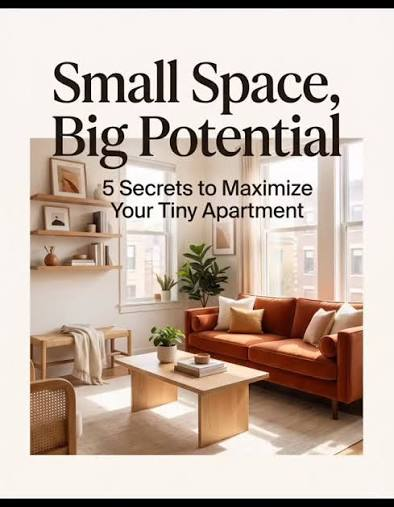
Living in a small home doesn’t mean settling for a cramped, cluttered space. In fact, some of the most stylish, functional interiors in the world exist in compact apartments — because limited square footage forces smarter decisions. The secret isn’t buying less furniture. It’s buying the right furniture.
This guide skips the usual “buy a small sofa” advice and instead breaks down exactly how to think about furniture when space is limited — covering layout psychology, multi-functional design, material choices, and buying mistakes that quietly eat up square footage.
Why Most Small Homes Feel Smaller Than They Are
Here’s an uncomfortable truth: it’s rarely the size of the home that makes it feel small. It’s usually the furniture choices inside it. Oversized sofas, bulky wardrobes, and too many standalone pieces create visual and physical bottlenecks that make even a decent-sized room feel like a maze.
Three things almost always shrink a room psychologically:
- Too much furniture touching the floor at different heights — creates visual clutter.
- Dark, heavy furniture without breathing room around it — absorbs light and makes walls feel closer.
- Furniture that blocks natural walking paths — forces the brain to register the room as “tight,” even if it technically isn’t.
Fixing these three issues alone can make a small room feel noticeably more open, often without buying a single new item.
Rule #1: Every Piece Should Earn Its Space
In a large home, furniture can exist just because it looks nice. In a small home, every piece needs to justify the floor space it occupies. Before buying anything, ask: Does this do more than one job?
This single question separates furniture that makes a small space feel functional from furniture that makes it feel congested.
Multi-functional furniture worth prioritizing:
- Storage beds — replace a separate wardrobe or storage unit entirely.
- Extendable dining tables — stay compact daily, expand only when guests arrive.
- Nesting coffee tables — function as one table or split into two, depending on need.
- Sofa-cum-beds — turn a living room into a functional guest room instantly.
- Wall-mounted folding desks — disappear completely when not in use.
- Ottomans with storage — double as seating, footrest, and hidden storage in one.
Rule #2: Vertical Space Is Free Real Estate
Most small homes are underused vertically. Floor space is limited, but wall space usually isn’t. Shifting storage and display upward instantly frees up walking room.
- Tall, narrow bookshelves store more than wide, short ones — without eating extra floor space.
- Wall-mounted shelving eliminates the need for bulky standalone units.
- Hanging or floating furniture (floating desks, floating TV units) creates a visual gap between furniture and floor, which tricks the eye into perceiving more open space.
A simple test: if a room has more than 40% of its wall space completely bare, there’s likely unused storage potential being wasted.
Rule #3: Match Furniture Scale to Room Scale
One of the most common small-space mistakes is buying furniture sized for a showroom rather than the actual room. A sofa that looks perfectly proportioned in a large store display can overwhelm a compact living room.
Before buying any large piece:
- Measure the room, not just the furniture.
- Leave at least 75–90 cm of walking clearance around major pieces.
- Choose furniture with visible legs rather than pieces that sit flush to the floor — this creates a sense of airiness underneath.
- Prefer armless or slim-arm sofas and chairs in tight living rooms; bulky arms can eat up to 20–30 cm of usable width per side.
Rule #4: Light Colors and Reflective Materials Aren’t Just Aesthetic — They’re Functional
In small spaces, color and material aren’t just about style; they directly affect how spacious a room feels.
- Light-colored upholstery and wood tones reflect more natural light, making rooms feel airier.
- Glass-top tables visually “disappear,” reducing the sense of furniture bulk.
- Mirrored or glossy furniture surfaces bounce light around the room, amplifying whatever natural or artificial light is available.
This doesn’t mean everything needs to be white — but leaning toward lighter, reflective finishes for large pieces (sofas, wardrobes, beds) while allowing darker accents in smaller items (a side table, a cushion, a lamp) creates balance without visual heaviness.
Rule #5: Fewer, Better Pieces Beat Many Small Ones
It’s tempting to fill a small room with several small furniture items, assuming smaller equals more space-efficient. In practice, the opposite is often true. Several small tables, stools, and racks scattered around create more visual clutter than one well-chosen multi-purpose piece.
A good rule of thumb: for any given function (seating, storage, surface space), aim for one strong solution rather than three partial ones.
Smart Layout Tricks That Cost Nothing
Not every improvement requires new furniture. Rearranging what you already own can dramatically change how a room feels.
- Float furniture away from walls when possible. Counterintuitively, pulling a sofa slightly away from the wall (even 15–20 cm) can make a room feel more intentional and less like storage against a boundary.
- Create one clear diagonal sightline. Arrange furniture so your eye can travel across the longest open diagonal of the room uninterrupted — this is one of the strongest tricks for making a room feel larger than it is.
- Anchor with a rug, not a wall. Defining a seating area with a rug rather than pushing furniture against walls creates a more open, apartment-lounge feel.
Common Small-Space Furniture Mistakes to Avoid
- Buying a sectional sofa “because it was on sale.” Sectionals eat enormous floor space and rarely suit compact living rooms.
- Choosing a dining table that seats more people than you’ll regularly host. Extendable tables solve this far better.
- Ignoring door and window clearances. Furniture that blocks a door swing or window seat instantly makes a room feel obstructed.
- Overcrowding a single wall. Spreading furniture across multiple walls, rather than stacking it all against one, distributes visual weight more evenly.
Final Thoughts: Small Space Doesn’t Mean Small Style
A compact home isn’t a limitation — it’s a design challenge that, when solved well, often results in more intentional, functional, and stylish spaces than larger homes with excess furniture. The goal isn’t to fit more into less space. It’s to choose fewer, smarter pieces that each do more.
When every item in a room has a clear purpose, enough breathing room, and the right scale, even the smallest apartment can feel open, organized, and genuinely comfortable to live in.
