
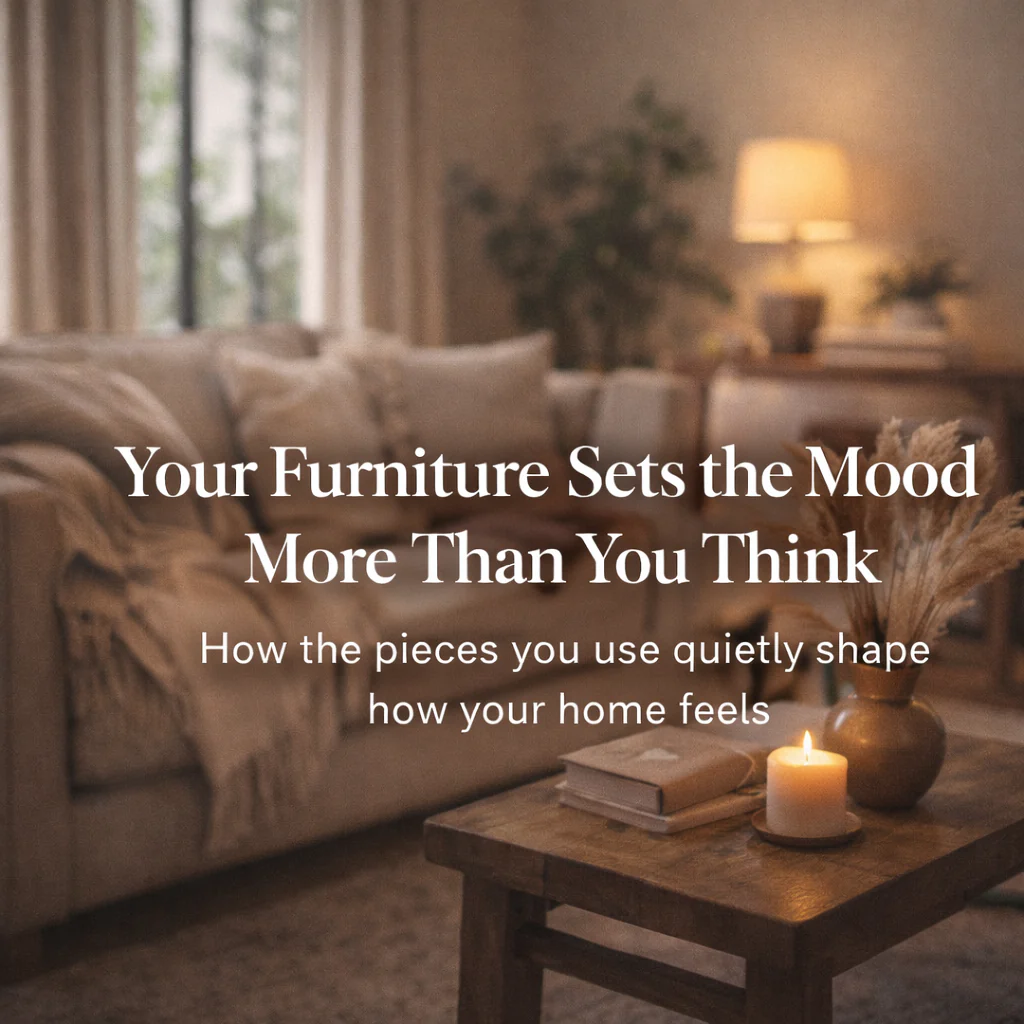
Most furniture articles tell you what’s “trending this season” or list the “top 10 sofas to buy.” This one takes a different route. Instead of chasing trends, let’s talk about something far more interesting — how the furniture sitting quietly in your home is actively shaping your mood, your focus, your relationships, and even your self-image, often without you realizing it.
Furniture isn’t just function. It’s not just four legs and a cushion. It’s a silent language your home speaks to you every single day. Once you understand this language, buying furniture stops being a chore and becomes a deliberate act of designing the life you want to live.
Why Furniture Is More Than Just “Stuff”
Think about the last time you walked into a room and instantly felt calm — or the opposite, instantly felt cramped and irritated. That reaction rarely comes from the walls. It comes from how the furniture is arranged, what it’s made of, and how it makes your body feel.
Environmental psychologists have long studied how physical spaces affect human behavior, and furniture is one of the biggest variables in that equation. The height of a chair, the softness of a sofa, the clutter around a desk — all of it sends signals to your brain about safety, comfort, status, and even how much energy you should have.
This is why two people can own the exact same size apartment and yet one home feels alive and welcoming while the other feels tense and unfinished. The difference is almost always in the furniture choices.
How Different Furniture Types Influence Your Mind
1. Seating Shapes Social Behavior
The way seating is arranged directly affects how people interact. A sofa and chairs arranged in a tight circle facing each other naturally invites conversation, eye contact, and connection. Furniture lined up against walls, facing a TV, tends to reduce interaction and encourage passive time.
If you feel like your family or roommates don’t talk much in the living room, try this: before buying new furniture, simply rearrange what you already own into a conversation-friendly layout. You’ll likely notice a shift in how much people actually talk to each other.
2. Desk and Chair Height Affects Focus
Poorly designed workspaces are one of the most overlooked reasons behind low productivity. A desk that’s too high or too low forces your body into awkward posture, which increases fatigue and reduces your ability to concentrate for long periods.
Ergonomically correct furniture — where your elbows rest at a 90-degree angle and your feet are flat on the floor — has been shown to reduce physical strain and mental fatigue. If you work from home, your desk and chair are arguably more important to your productivity than your laptop.
3. Bedroom Furniture Affects Sleep Quality
Bulky, dark, or cluttered bedroom furniture can subconsciously keep your nervous system on alert, making it harder to fully relax. Lighter, minimal furniture with clean lines tends to create a calmer visual environment, which supports better sleep.
Even something as simple as removing a chair that’s constantly used to pile clothes can change how “restful” a bedroom feels, because visual clutter is directly linked to mental clutter.
4. Material Choice Triggers Emotional Response
Wood tends to evoke warmth, stability, and comfort — which is why it’s a favorite in homes that want to feel “grounded.” Metal and glass evoke modernity, precision, and sometimes coldness. Fabric and upholstery evoke softness and approachability.
None of these are “better” — but knowing what emotional tone each material creates helps you choose furniture that actually matches the feeling you want a room to have, instead of picking based on trend alone.
The “Different” Way to Choose Furniture: Function First, Emotion Second, Trend Last
Here’s a simple three-step framework that flips the usual furniture-shopping approach on its head.
Step 1: Define the function. Before browsing anything, ask: What will this piece actually be used for, and by whom? A coffee table in a home with toddlers needs very different properties than one in a couple’s minimalist apartment.
Step 2: Define the emotional tone. Do you want this room to feel calm, energetic, social, or focused? Choose materials, colors, and shapes that support that emotional goal — not just what looks good in a photo.
Step 3: Then, and only then, consider trend. Trends fade fast. If you buy furniture based purely on what’s popular right now, you’ll likely want to replace it in two years. But furniture chosen for function and emotional fit tends to stay relevant regardless of what’s “in.”
This approach naturally leads to furniture that feels timeless rather than dated, and it saves money in the long run because you’re not constantly replacing pieces that no longer “match the vibe.”
Small Furniture Changes With a Big Psychological Impact
You don’t need to renovate your entire home to feel the psychological benefits of better furniture choices. Some small, low-cost changes make a surprisingly large difference:
- Add one plant-friendly furniture surface. A small table or shelf dedicated to greenery has been linked to lower stress levels in home environments.
- Swap one hard chair for a softer one in your most-used room. Comfort cues relaxation, which affects how long people naturally want to stay and connect in that space.
- Declutter surfaces, not just floors. A clear tabletop or countertop reduces visual noise far more than people expect.
- Create one “no-screen” seating corner. A single chair with good lighting, away from a TV or desk, can become a natural spot for reading or reflection — subtly encouraging downtime.
- Face at least one seat toward a window. Natural light exposure while seated has a measurable effect on mood regulation.
None of these require a big budget. They require intention.
Sustainable and Multi-Functional Furniture: The Practical Side of “Different”
Beyond psychology, there’s a practical shift happening in how people choose furniture today — toward pieces that do more with less. Multi-functional furniture (a bed with storage, a table that extends, a bench that opens up) isn’t just a space-saving trend; it reduces decision fatigue and clutter, both of which tie back into the emotional benefits discussed above.
Similarly, sustainably made furniture — solid wood over particleboard, natural fibers over synthetic ones — tends to last longer, both physically and stylistically, meaning fewer replacement purchases and less mental “noise” from constantly reevaluating your space.
Furniture as a Reflection of Identity
There’s one more layer worth mentioning: furniture is one of the clearest reflections of identity in a home. The way someone arranges their living room, the era or style of pieces they choose, even how organized or lived-in their furniture looks — all of it communicates something about who they are and how they want to be seen.
This is why furniture shopping can feel emotionally loaded. You’re not just picking a chair. You’re making a small statement about the kind of life you’re building.
Final Thoughts: Buy Furniture Like You’re Designing a Feeling, Not Filling a Room
The next time you’re furniture shopping, resist the urge to simply fill empty space. Instead, ask yourself what feeling you want that space to produce — calm, focus, connection, energy — and choose furniture that actively supports that feeling.
Furniture isn’t background scenery in your life. It’s a quiet, constant influence on your mood, your habits, and your relationships. Choose it the way you’d choose anything else that shapes your daily life: with intention, not just impulse.
When you start seeing furniture this way, your home stops being just a collection of objects — and starts becoming a space that genuinely works for who you are.
