
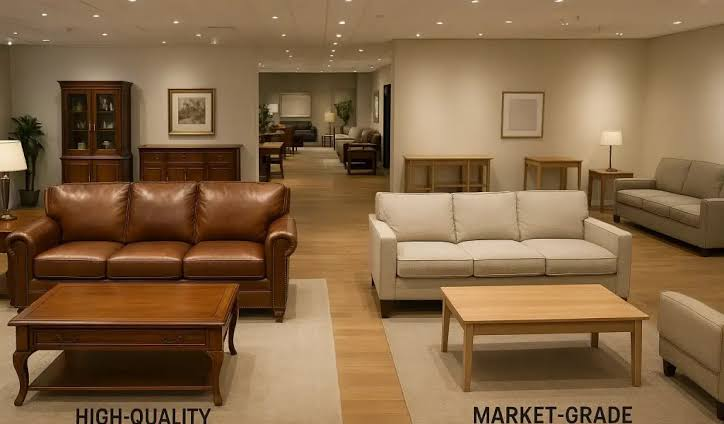
Most people shop for furniture the way they shop for clothes — based on how it looks in the showroom or on a website. But furniture isn’t a one-season purchase. A sofa, dining table, or bed is meant to last years, sometimes decades. The problem is that poor-quality furniture and well-made furniture often look identical in photos — and sometimes even in person, until you know exactly what to check.
This guide walks through the practical, often-overlooked details that separate furniture built to last from furniture built to sell.
Why “Looks Good” Isn’t the Same as “Built Well”
Showrooms are designed to make furniture look flawless — perfect lighting, styled cushions, and staged angles hide a lot of structural shortcuts. A sofa can have beautiful upholstery and still have a weak internal frame that sags within a year. A dining table can have a stunning wood veneer over particleboard that swells the first time it gets wet.
The goal isn’t to distrust every piece of furniture — it’s to know which specific details actually indicate quality, so you’re not relying on guesswork or price alone.
1. Check the Frame Before Anything Else
The frame is the skeleton of any furniture piece, and it matters more than fabric, finish, or design.
For sofas and chairs:
- Solid hardwood frames (oak, beech, ash) are far more durable than softwood or particleboard frames.
- Gently push or rock the piece. A well-built frame won’t creak, wobble, or flex.
- Ask about joinery. Corner blocks, dowels, and mortise-and-tenon joints are far stronger than staples or glue alone.
For tables and cabinets:
- Lift a corner slightly (with permission, if in a store) — solid wood feels noticeably heavier than particleboard or MDF of the same size.
- Check the underside. Manufacturers rarely finish hidden surfaces, so raw or exposed particleboard there often signals corners cut elsewhere too.
2. Understand What “Solid Wood,” “Veneer,” and “Engineered Wood” Actually Mean
These terms get used loosely in marketing, but they mean very different things for durability.
- Solid wood — a single piece of natural wood throughout. Most durable, most expensive, ages well, can often be refinished or repaired.
- Veneer — a thin layer of real wood glued over a core material (often plywood or MDF). Can look identical to solid wood but is more vulnerable to moisture and can’t be sanded or repaired as easily.
- Engineered wood (MDF/particleboard) — manufactured from wood fibers and resin. Budget-friendly and consistent, but weaker under moisture, weight, and repeated stress.
None of these are automatically “bad” — engineered wood is perfectly fine for low-stress items like a decorative shelf. But for high-stress furniture like dining tables, bed frames, or heavily used chairs, solid wood or high-quality veneer over plywood is a much safer long-term investment.
3. Test Joints and Movement, Not Just Surfaces
Weak joinery is one of the most common — and most hidden — quality issues in furniture.
- Drawers: Pull them fully open. Quality drawers use dovetail joints and glide smoothly on metal runners, not just plastic tracks or friction against wood.
- Chairs: Sit down and shift your weight side to side. Any creaking or looseness usually means weak joints that will worsen with regular use.
- Doors and cabinets: Open and close them a few times. They should move smoothly and align evenly, without dragging or gaps.
4. Upholstery: What’s Underneath Matters More Than the Fabric
It’s easy to judge a sofa by its fabric, but the fabric is the least important quality factor. What’s underneath determines how it holds up.
- Cushion fill: High-density foam or a foam-and-fiber blend holds shape far longer than low-density foam, which flattens quickly.
- Fabric weave: Tightly woven fabrics resist pilling and wear better than loosely woven ones.
- Seams and stitching: Double-stitched seams last significantly longer under regular use than single-stitched ones.
A simple in-store test: press down firmly on a cushion and release. Quality foam regains its shape within a few seconds. Low-quality foam stays compressed or recovers slowly.
5. Metal and Hardware Details
Hinges, handles, screws, and legs are small components that quietly determine how long furniture survives daily use.
- Solid metal hardware feels heavier and resists bending compared to lightweight or hollow alternatives.
- Adjustable furniture (recliners, extendable tables, height-adjustable desks) should move smoothly without excessive force or grinding sounds.
- Furniture legs that screw into a solid wood or metal insert last far longer than legs attached directly into particleboard, which loosens over time.
6. Finish and Coating Quality
A good finish isn’t just about shine — it protects the material underneath.
- Run a hand across the surface. Quality finishes feel smooth and even, without rough patches, drips, or uneven color.
- Check edges and corners, where finish coats are most likely to be thin or incomplete.
- For outdoor or high-moisture areas, confirm the finish is specifically rated for that use — indoor finishes often fail quickly outdoors or in humid rooms.
Red Flags That Signal Lower-Quality Furniture
- Unusually lightweight pieces for their size, often indicating hollow or low-density materials.
- Strong chemical smell straight out of packaging, which can indicate low-grade adhesives or finishes.
- Visible staples instead of proper joinery on frames.
- Uneven gaps in drawers, doors, or panel alignment.
- Warranty periods under a year on major furniture pieces — a sign the manufacturer doesn’t expect it to last much longer than that.
Price Isn’t Always a Reliable Signal — But It’s Not Irrelevant Either
Expensive furniture isn’t automatically well-made, and budget furniture isn’t automatically poor quality. However, genuinely durable materials, real joinery, and quality craftsmanship do cost more to produce — so extremely low prices on large furniture pieces are usually achieved by cutting corners somewhere in the frame, joints, or fill material.
The smarter approach is to spend selectively: invest more in high-stress, long-term pieces (sofas, beds, dining tables) where quality directly affects comfort and durability, while saving on lower-stress decorative or occasional-use items.
Final Thoughts: Buy Furniture Like You’re Buying for a Decade, Not a Season
The most expensive furniture mistake isn’t overspending — it’s replacing poorly made pieces every few years because they weren’t built to last in the first place. Learning to check frames, joinery, materials, and hardware takes a few extra minutes in the store, but it’s the difference between furniture that ages gracefully and furniture that quietly falls apart.
Next time you’re furniture shopping, look past the styling and lighting. Check the frame, test the joints, press the cushions, and inspect the finish. The pieces that pass these checks are the ones that’ll still be standing strong — and still looking good — years down the line.
