
Furniture does more than fill empty space in a home. It shapes how a room feels, how comfortably a family lives, and how long a house stays functional and stylish. Whether you’re furnishing a brand-new apartment or slowly upgrading a home you’ve lived in for years, understanding the fundamentals of furniture selection can save money, prevent regret, and help you build a space you genuinely enjoy living in.
This guide walks through everything you need to know about buying furniture — from materials and styles to budgeting and room-specific tips — so you can make confident, informed decisions.
Why Choosing the Right Furniture Matters
Furniture is one of the biggest investments in any home after the property itself. A sofa, dining table, or bed frame isn’t just a functional object — it’s something you’ll interact with daily for years, sometimes decades. Poor choices lead to wasted money, cluttered rooms, and pieces that need replacing far too soon. Thoughtful choices, on the other hand, create spaces that feel intentional, comfortable, and easy to maintain.
Good furniture selection also affects resale value. Homes that are staged or previously furnished with quality, well-proportioned pieces tend to feel more polished to buyers and renters alike. Even if you’re not planning to sell anytime soon, furniture that suits your space properly makes everyday living noticeably better.
Understanding Furniture Materials
The material a piece is made from determines its durability, appearance, price, and maintenance needs. Here are the most common options:
Solid Wood
Solid wood furniture — oak, walnut, teak, maple, and mahogany are popular choices — is prized for its strength and longevity. It can be refinished multiple times, ages gracefully, and often becomes more valuable over time. The tradeoff is cost: solid wood pieces are typically more expensive than manufactured alternatives.
Engineered Wood
Plywood, MDF (medium-density fiberboard), and particleboard are common in budget-friendly furniture. These materials are more affordable and often lighter, making them easier to move. However, they’re more susceptible to water damage and generally don’t last as long as solid wood.
Metal
Metal furniture, including steel and iron frames, offers excellent durability and a modern aesthetic. It’s a popular choice for outdoor furniture, industrial-style interiors, and pieces that need to support significant weight, like bed frames or shelving units.
Upholstery Fabrics
For sofas, chairs, and headboards, fabric choice affects both comfort and upkeep. Performance fabrics and microfiber resist stains and are ideal for households with kids or pets. Natural fabrics like linen and cotton offer breathability and a softer look but may require more careful cleaning. Leather remains a premium choice known for durability and easy wipe-down maintenance.
Matching Furniture Style to Your Home
Furniture style should complement your home’s existing architecture and your personal taste. Some of the most popular styles include:
- Modern — Clean lines, minimal ornamentation, and a focus on function. Neutral colors and materials like glass, metal, and light wood dominate this style.
- Traditional — Rich wood tones, classic silhouettes, and detailed carvings characterize traditional furniture, often paired with warm, layered color palettes.
- Mid-Century Modern — Defined by tapered legs, organic curves, and a mix of wood and bold accent colors, this style remains a timeless favorite.
- Industrial — Raw materials like exposed metal and reclaimed wood create a rugged, utilitarian look popular in loft-style homes.
- Scandinavian — Light woods, simple forms, and a focus on comfort and functionality define this minimalist, cozy aesthetic.
- Farmhouse — Rustic wood finishes, distressed textures, and a blend of vintage and practical design elements.
Mixing styles is increasingly common and can create a personalized, layered look — but it works best when there’s a unifying thread, such as a consistent color palette or wood tone, tying pieces together.
Room-by-Room Furniture Tips
Living Room
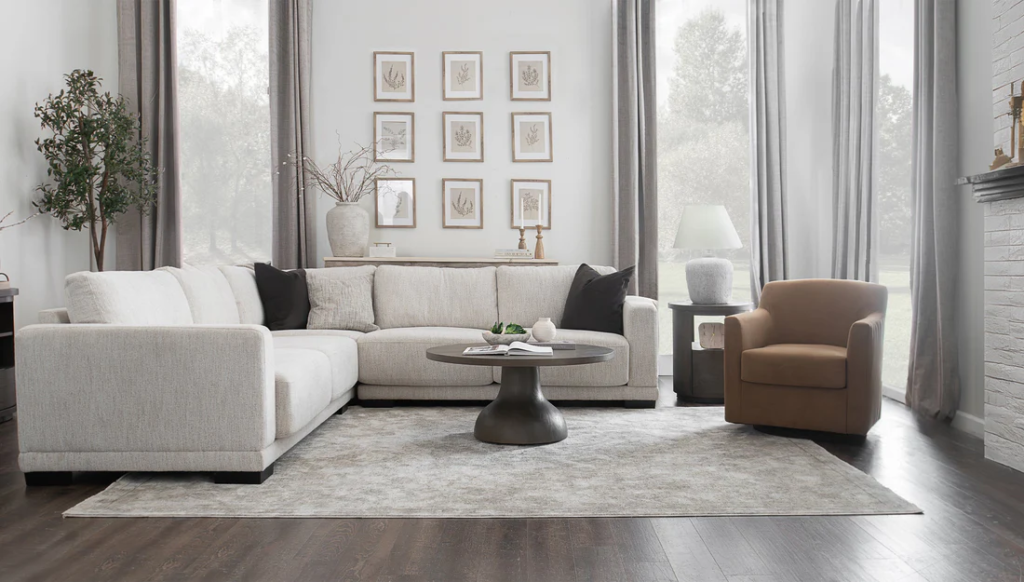
The sofa is usually the anchor piece of a living room, so prioritize comfort and proportion. Measure your space carefully before buying — a sofa that’s too large can overwhelm a room, while one that’s too small can leave it feeling unbalanced. Coffee tables, accent chairs, and media consoles should complement the sofa’s scale and style rather than compete with it.
Bedroom
A supportive, well-constructed bed frame and mattress combination is essential, but don’t overlook nightstands, dressers, and wardrobes. Storage furniture should match your actual needs — overbuying results in wasted space, while underbuying leads to clutter. Soft, warm lighting paired with furniture in muted tones tends to create a more restful atmosphere.
Dining Room
Dining tables should be sized appropriately for the number of people who’ll regularly use them, with enough clearance around the table for chairs to pull out comfortably — generally at least 36 inches of walking space on all sides. Extendable tables are a smart option for households that entertain occasionally but don’t need a large table daily.
Home Office
With more people working from home, ergonomic furniture has become essential. An adjustable chair, a desk at the correct height, and adequate storage for documents and equipment can significantly improve comfort and productivity throughout the workday.
Outdoor Spaces
Outdoor furniture needs to withstand sun, rain, and temperature swings. Materials like teak, powder-coated aluminum, and synthetic wicker are popular for their weather resistance. Cushions and fabrics should be UV-resistant and quick-drying to handle unpredictable weather.
Budgeting for Furniture
Furniture budgets vary widely, but a few principles apply across price ranges:
- Invest in pieces you use most. A sofa or mattress used daily deserves a larger portion of your budget than an accent table used occasionally.
- Balance splurges with savings. Pair a higher-cost statement piece with more affordable supporting furniture to keep your overall spend reasonable.
- Factor in longevity. A slightly more expensive piece that lasts fifteen years is often a better value than a cheaper one replaced every three.
- Watch for sales cycles. Furniture retailers often run major sales around holidays like Presidents’ Day, Memorial Day, Labor Day, and Black Friday, which can be excellent times to buy big-ticket items.
Sustainable and Eco-Friendly Furniture Choices
Sustainability has become a growing priority for furniture shoppers. Look for pieces made from FSC-certified wood, which ensures responsible forestry practices. Reclaimed and recycled materials — from barn wood to recycled metal — reduce environmental impact while often adding unique character to a piece. Buying secondhand or vintage furniture is another sustainable option that can also introduce distinctive style elements unavailable in mass-produced items.
Additionally, choosing durable, well-made furniture over disposable options reduces landfill waste over time, since quality pieces don’t need to be replaced as frequently.
Measuring and Planning Before You Buy
One of the most common furniture-buying mistakes is skipping proper measurements. Before purchasing anything, measure:
- The dimensions of the room, including doorways, hallways, and staircases the furniture must pass through
- The specific area where the piece will sit, accounting for walking space
- Ceiling height if considering tall furniture like bookcases or wardrobes
Using painter’s tape to outline a piece’s footprint on the floor can help visualize how it will fit in the room before committing to a purchase.
Caring for Your Furniture
Proper maintenance extends the life of any furniture investment. Wood pieces benefit from occasional polishing and protection from direct sunlight, which can cause fading and warping. Upholstered furniture should be vacuumed regularly and treated with fabric protector if it will see heavy use. Metal furniture, especially outdoor pieces, may need periodic rust prevention treatments depending on the climate.
Rotating cushions, avoiding excessive weight on delicate joints, and using coasters or protective pads can all help keep furniture looking newer for longer.
Final Thoughts
Choosing furniture is a balance of function, style, budget, and durability. By understanding materials, matching pieces to your home’s architecture and your lifestyle, planning your space carefully, and investing wisely in the pieces you use most, you can create a home that feels both comfortable and cohesive. Furniture shopping doesn’t have to be overwhelming — with the right approach, it becomes an opportunity to shape a space that truly reflects how you live.
