
Living in a small apartment, studio, or compact home doesn’t mean you have to compromise on comfort, function, or style. With thoughtful furniture choices and smart planning, even the tightest spaces can feel open, organized, and inviting. This guide covers practical furniture ideas, space-saving strategies, and design tips to help you make the most of every square foot.
Why Furniture Choice Matters Even More in Small Spaces
In a larger home, an oversized sofa or bulky dresser might simply take up a corner. In a small space, the wrong furniture choice can dominate the entire room, block natural light, and make daily movement difficult. Every piece you bring into a compact home works harder — it needs to serve a clear purpose, fit the scale of the room, and ideally do more than one job.
Choosing furniture with intention is the single biggest factor in whether a small space feels cramped or comfortable.
Multi-Functional Furniture: The Small-Space Essential
The most valuable furniture for compact homes is furniture that does double duty.
Sofa Beds and Sleeper Sectionals
A quality sofa bed eliminates the need for a dedicated guest room while still providing comfortable seating during the day. Modern sleeper sofas have improved significantly in comfort, with better mattresses and easier fold-out mechanisms than older models.
Storage Ottomans
An ottoman that opens up to reveal storage space can hold blankets, books, or seasonal items while doubling as a coffee table or extra seating when guests arrive.
Extendable Dining Tables
For those who don’t need full dining capacity every day, an extendable or drop-leaf table can stay compact for daily use and expand only when hosting.
Murphy Beds
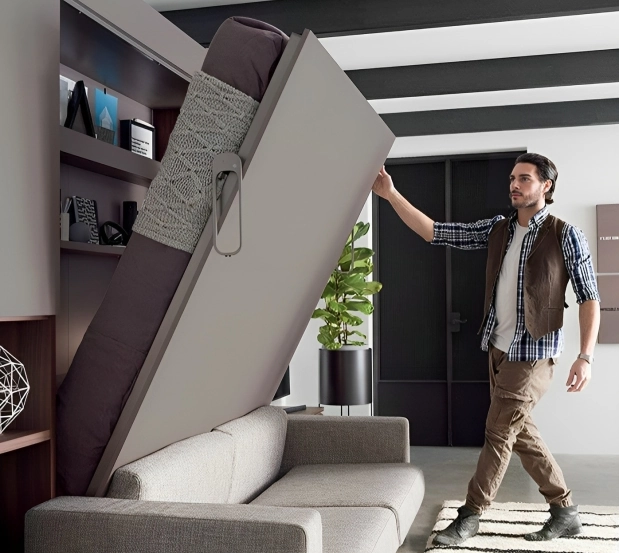
Wall-mounted beds that fold up when not in use can free up an entire room during the day, transforming a bedroom into a home office or living space.
Nesting Tables
A set of nesting tables can function as a single side table most of the time, with additional surfaces pulled out only when needed for guests or extra tasks.
Vertical Storage: Making the Most of Height
When floor space is limited, going vertical is one of the most effective strategies.
- Tall bookshelves and wall units draw the eye upward, making ceilings feel higher while providing ample storage without eating into floor space.
- Wall-mounted shelves in kitchens, bathrooms, and living rooms free up counter and floor area for other uses.
- Hanging organizers and pegboards in entryways or kitchens keep frequently used items accessible without cluttering surfaces.
- Loft beds in bedrooms create usable space underneath for a desk, seating area, or additional storage.
Choosing the Right Scale and Proportions
Furniture scale is critical in small spaces. Oversized pieces — even beautiful ones — can make a room feel smaller and more cluttered than it actually is. When shopping, keep these guidelines in mind:
- Measure before you buy. Know the exact dimensions of your room, including doorways and hallways the furniture needs to pass through.
- Choose furniture with visible legs. Sofas, chairs, and cabinets raised off the floor create a sense of openness, since light can pass beneath them.
- Opt for armless or slim-profile seating. Armless chairs and narrow sofa designs take up noticeably less visual and physical space.
- Avoid deep, bulky pieces. A slightly narrower sofa or dining table can make a meaningful difference in a tight room without sacrificing much comfort.
Furniture Placement Strategies for Small Rooms
How you arrange furniture matters just as much as what you choose.
- Float furniture away from walls when possible to create a sense of flow, rather than lining every piece along the perimeter.
- Create clear pathways. Aim for at least 30 inches of walking space in high-traffic areas so the room doesn’t feel obstructed.
- Use furniture to define zones. In studio apartments, a bookshelf or console table can subtly separate a sleeping area from a living area without needing walls.
- Angle furniture in corners to make use of otherwise wasted space and create a more dynamic layout.
Color, Material, and Light in Small Spaces
Beyond the furniture itself, material choices and finishes influence how spacious a room feels.
Light Colors and Reflective Surfaces
Furniture in light woods, whites, and pale neutrals tends to make a room feel more open than dark, heavy pieces. Glass tabletops and mirrored furniture can add functional surface area while reflecting light and visually expanding a space.
Transparent Materials
Acrylic or glass chairs and tables are popular in small spaces because they take up physical space without adding visual bulk, keeping sightlines open across the room.
Consistent Tones
Using a cohesive color palette across furniture pieces helps a small room feel unified rather than choppy, which can make it appear larger and more intentional.
Room-by-Room Small Space Solutions
Studio Apartments
In a studio, furniture needs to define separate living zones within one open room. A daybed that functions as both seating and a bed, paired with a room divider or open shelving unit, can create the feel of distinct spaces without permanent walls.
Small Bedrooms
Choose a bed frame with built-in storage drawers underneath to eliminate the need for a separate dresser. Floating nightstands or wall-mounted shelves next to the bed save floor space while still providing a surface for essentials.
Compact Kitchens
A slim rolling cart can serve as extra counter space, storage, and a serving cart, and it can be tucked away when not needed. Foldable or wall-mounted dining tables work well for kitchens that double as eating areas.
Small Living Rooms
A loveseat paired with a couple of lightweight accent chairs often works better than one large sectional, offering flexibility to rearrange the room for different occasions.
Home Offices in Shared Spaces
A slim writing desk that can tuck against a wall, paired with a chair that slides fully underneath, allows a workspace to disappear when not in use — ideal for combined living and working areas.
Smart Shopping Tips for Small-Space Furniture
- Prioritize modular pieces. Sectionals and shelving systems that can be reconfigured or expanded over time adapt better to changing needs than fixed, single-purpose furniture.
- Test flexibility before buying. If possible, see how a piece folds, extends, or converts in person, since these mechanisms vary widely in quality and ease of use.
- Don’t ignore weight. Lighter furniture is easier to rearrange, which is especially useful in small spaces where you may want to reconfigure the layout seasonally or for guests.
- Custom and made-to-measure options are worth considering for awkward spaces like alcoves or narrow hallways, where standard furniture sizes may not fit well.
Common Small-Space Furniture Mistakes to Avoid
- Buying furniture before measuring the space. This is the most frequent and costly mistake, often resulting in pieces that don’t fit or overwhelm the room.
- Overfilling the room. Small spaces benefit from restraint — a few well-chosen pieces usually look better and function better than trying to fit in everything you own.
- Ignoring storage needs. Without adequate storage, small spaces quickly become cluttered, undermining even the best furniture choices.
- Choosing style over function. In compact homes, furniture that looks great but doesn’t serve a practical purpose often ends up being more of a hindrance than an asset.
Final Thoughts
Furnishing a small space is less about fitting in less furniture and more about choosing the right furniture — pieces that are multi-functional, appropriately scaled, and thoughtfully placed. With smart storage solutions, careful measuring, and a focus on light, flexible materials, even the coziest homes can feel spacious, organized, and stylish. The goal isn’t to make a small space look bigger than it is, but to make it work as efficiently and comfortably as possible for the way you actually live.
