
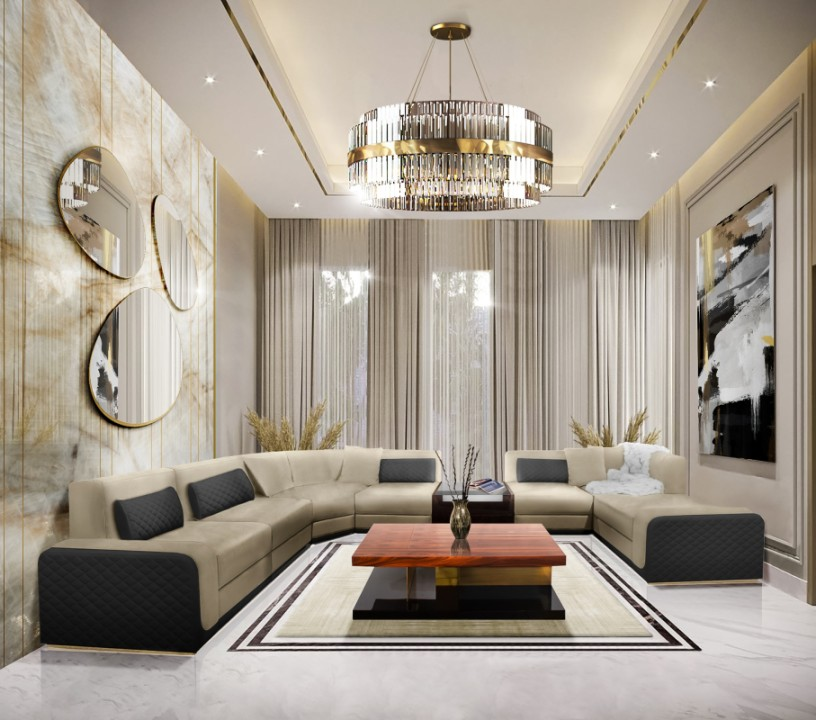
Walk into ten different apartments furnished from the same big-box store, and you’ll notice something unsettling: they all look the same. The same gray sofa. The same particleboard coffee table. The same mass-produced prints hanging at the same height. Basic furniture isn’t bad, exactly — it’s just forgettable. And in a world where your home is one of the few spaces you fully control, forgettable is a missed opportunity.
If you’re tired of rooms that feel like showroom floors and ready to build a space with actual personality, this guide walks through how to shop for furniture that stands out — without tipping into chaos, without blowing your budget, and without sacrificing comfort for looks.
Why “Basic” Furniture Became the Default
Before talking about how to break free of basic furniture, it helps to understand why it became the norm in the first place.
Mass-market furniture is designed to be inoffensive. It has to appeal to the widest possible audience, ship flat-packed, assemble easily, and photograph well in a catalog. Neutral colors, safe silhouettes, and predictable proportions aren’t accidents — they’re business decisions. Retailers optimize for broad appeal, not individual expression.
The result is a kind of furniture monoculture: beige sectionals, glass-and-chrome side tables, and matching three-piece sets that all trace back to the same handful of factories. None of it is wrong, but none of it says anything either.
Choosing non-basic furniture means intentionally stepping outside that system — sometimes just for a few key pieces, sometimes for an entire room.
Start With One Statement Piece, Not a Whole Room Overhaul
The biggest mistake people make when trying to escape “basic” is trying to change everything at once. That usually ends in a room that feels chaotic rather than curated.
Instead, pick one piece to anchor the space:
- A sculptural accent chair with an unusual silhouette
- A vintage sideboard with brass hardware and real wood grain
- A boldly upholstered sofa in an unexpected color like burnt sienna or forest green
- A hand-carved coffee table instead of a flat-pack rectangle
Once that anchor piece is in place, everything else in the room can stay relatively neutral. The statement piece does the visual work, and the rest of the furniture supports it rather than competing with it. This is how professional interior designers avoid overwhelming a space — one bold move, balanced by restraint everywhere else.
Materials Matter More Than Style Labels
A lot of people search for furniture “styles” — mid-century modern, industrial, bohemian, Scandinavian — as a shortcut to good taste. But style labels can become just another form of basic if everyone buys the same mid-century-inspired credenza from the same three retailers.
A more reliable signal of quality and character is material. Furniture made from solid wood, hand-finished metal, natural stone, or genuine leather almost always looks and feels more distinctive than furniture built from laminate, particleboard, or bonded leather — regardless of style category.
When shopping, ask:
- Is this solid wood, veneer, or engineered board?
- Are the joints dovetailed, doweled, or just glued and stapled?
- Does the metal have real weight, or is it a thin decorative shell?
- Will this material develop character over time (like leather or brass) or just wear out?
Pieces made with real materials tend to age well, which means they stay interesting instead of looking dated after a few years — unlike a lot of trend-driven basic furniture that starts looking tired within a couple of seasons.
Mix Eras Instead of Matching Sets
Matching furniture sets are the fastest route to a basic-looking room. A sofa, loveseat, and armchair all from the same collection, in the same fabric, tells a visitor exactly where you shopped and exactly nothing about who you are.
Designers who create memorable interiors almost never buy matching sets. Instead, they mix:
- A modern sofa with a vintage or antique coffee table
- Contemporary lighting paired with an heirloom rug
- Clean-lined dining chairs around a reclaimed wood table
- New upholstery on a secondhand frame with great bones
This kind of mixing creates visual tension that makes a room feel collected over time rather than purchased in a single trip. It also tends to be more budget-friendly, since you can splurge on one or two pieces and save on the rest by shopping secondhand, at estate sales, or through online vintage marketplaces.
Color and Texture Do More Work Than Shape
You don’t need wildly avant-garde silhouettes to avoid looking basic. Often, color and texture alone are enough to transform an otherwise conventional piece into something memorable.
Consider:
- A classic tuxedo sofa reupholstered in a deep terracotta bouclé instead of standard gray linen
- A simple wooden dining table with a hand-rubbed, richly pigmented stain instead of a generic honey oak finish
- Dining chairs mixed in two complementary colors instead of an identical set
- A rattan or cane-backed chair, which adds texture without shouting for attention
This approach is especially useful for people who want distinctive furniture but aren’t ready to commit to unusual shapes. Texture and color are lower-risk ways to add personality, and they’re also easier to change later if your taste evolves.
Shop Where Basic Furniture Doesn’t Live
Where you shop has an enormous effect on what ends up in your home. If every purchase comes from the same two or three national retailers, your furniture will inevitably resemble everyone else’s, no matter how carefully you choose within that selection.
To find furniture with more character, look beyond the obvious:
- Independent and local makers. Many cities have furniture makers and small workshops producing original designs in limited runs.
- Estate sales and auctions. Older furniture, particularly from the mid-20th century, was often built with better materials and more distinctive proportions than what’s mass-produced today.
- Online vintage marketplaces. These have made sourcing unique secondhand pieces dramatically easier than it used to be, with searchable listings by era, material, and region.
- Artisan marketplaces. Platforms that connect buyers directly with furniture makers often carry pieces you simply won’t find anywhere else.
- Salvage and reclaimed material shops. Furniture built from reclaimed wood or repurposed industrial materials tends to have a story and a texture that new, uniform materials can’t replicate.
Diversifying where you shop is arguably the single most effective way to end up with furniture that doesn’t look like it came from a catalog.
Don’t Ignore Function for the Sake of a Statement
It’s worth saying clearly: distinctive furniture still has to work for your life. A stunning chair that’s uncomfortable to sit in, or a beautiful table too fragile for daily use, will eventually become clutter instead of a favorite piece.
Before committing to a bold or unusual piece, ask practical questions:
- Will this fit through my door and up my stairs?
- Does it suit how I actually use the room — working, relaxing, hosting?
- Can it handle pets, kids, or daily wear?
- Is it comfortable, not just photogenic?
The best non-basic furniture pieces are the ones that are both visually distinctive and genuinely functional. A gorgeous chair nobody sits in isn’t a design win — it’s an expensive prop.
Building a Room That Feels Like You
Ultimately, moving away from basic furniture isn’t about rejecting simplicity or chasing trends in the opposite direction. It’s about intention. Basic furniture is what happens when decisions are made quickly, based on convenience and price alone. Distinctive furniture is what happens when you slow down and choose pieces because they mean something to you — their material, their history, their shape, or simply how they make a room feel.
You don’t need an unlimited budget or a background in design to do this. You need patience, a willingness to mix sources, and the confidence to choose pieces that feel right even if they don’t match a pre-packaged style. Start with one meaningful piece. Let it set the tone. Build outward from there.
The result won’t just be a home that looks less basic — it will be one that actually feels like yours.
