
Choosing distinctive furniture is easier in theory than in practice. It’s one thing to say “avoid matching sets” or “mix eras” — it’s another to actually walk into a living room, bedroom, or home office and know which pieces will make it feel intentional instead of generic.
This guide breaks the process down room by room, with concrete furniture ideas and shopping strategies for each space. Use it alongside broader principles like material quality and sourcing from independent makers to build a home that doesn’t look like everyone else’s.
Living Room: Where the Statement Piece Lives
The living room usually gets the most foot traffic and the most attention, which makes it the best place to spend your “boldness budget.”
Sofa alternatives to the standard sectional:
- A curved, channel-tufted sofa in a saturated color
- A vintage Chesterfield reupholstered in an unexpected fabric
- A daybed-style sofa with exposed wood legs instead of upholstered skirting
Coffee tables worth a second look:
- Organic, live-edge wood slabs
- Sculptural stone or concrete bases with a glass or wood top
- Vintage trunks or steamer chests repurposed as coffee tables
Seating beyond the standard armchair:
- A single dramatic swivel chair in leather or bouclé
- A pair of mismatched vintage chairs instead of a matched set
- A woven rattan papasan or egg chair for texture and softness
The goal in the living room is to pick one or two pieces that draw the eye, then let rugs, lighting, and smaller accents do quieter supporting work.
Bedroom: Comfort First, Character Close Behind
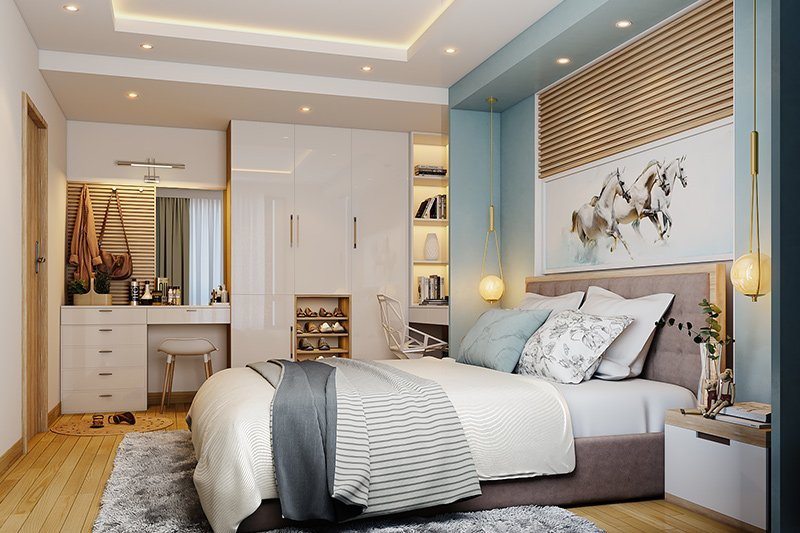
Bedrooms tend to default to matching hotel-style sets — a bed frame, two nightstands, and a dresser all from the same collection. Breaking that pattern doesn’t require sacrificing the calm, restful feel a bedroom needs.
Bed frames with more presence:
- An upholstered bed with a tall, curved headboard
- A four-poster or canopy frame in a lighter, modern silhouette rather than an ornate traditional one
- A platform bed in solid walnut or oak instead of laminate
Nightstands that don’t have to match:
- Two entirely different nightstands, unified by a similar wood tone or metal finish
- A vintage side table on one side, a modern minimalist piece on the other
- Wall-mounted floating shelves in place of traditional nightstands for a lighter, less boxy feel
Dressers and storage:
- A refinished vintage dresser with original brass or bone hardware
- A rattan-front wardrobe for texture in an otherwise simple room
- Built-in-style modular storage that can be reconfigured as needs change
Because bedrooms are more private, this is a lower-stakes place to experiment with bolder choices before bringing that confidence into more public rooms.
Dining Room: The Case for Mismatched Chairs
Few furniture choices signal “basic” faster than an exact-match dining set — one table, six identical chairs, all from the same box.
Table ideas:
- A reclaimed wood farmhouse table with visible grain and knots
- A pedestal-base table in stone, concrete, or terrazzo
- An oval or rounded table instead of the default rectangle, which can also improve conversation flow
Chair strategies:
- Mix two complementary chair styles — for instance, wishbone-style wood chairs at the ends with upholstered chairs along the sides
- Use a bench on one side instead of chairs, which adds an unexpected shape and extra seating flexibility
- Choose chairs in two coordinating colors rather than one uniform shade
Lighting as furniture: Pendant lighting over a dining table functions almost like a piece of furniture in how much it shapes the room’s character. A sculptural or oversized fixture can do as much visual work as the table itself.
Home Office: Function Doesn’t Have to Mean Boring
Home offices are often furnished as an afterthought, with whatever desk and chair were cheapest and fastest to assemble. But since this is a space many people now spend hours in daily, it’s worth treating with the same intention as more “visible” rooms.
Desks beyond the standard rectangle:
- A vintage writing desk with real drawers and hardware
- A rounded or curved desk that softens a boxy room
- A wall-mounted floating desk for smaller spaces, which also opens up floor space
Seating that doesn’t scream “office”:
- A well-designed task chair in leather or a rich fabric instead of standard mesh
- A vintage bentwood or leather chair for shorter work sessions, paired with a more ergonomic option for long days
- An upholstered bench or daybed nearby for reading or calls away from the desk
Storage with personality:
- A vintage filing cabinet, refinished and repainted
- Open wood shelving instead of closed cabinets, allowing books and objects to become part of the room’s visual interest
Entryway: Small Space, Big First Impression
The entryway is often the smallest and most overlooked space in a home, but it’s also the first thing anyone sees. A single distinctive piece here does outsized work.
- A console table with an unusual base — hairpin legs, a sculptural stone form, or a vintage washstand repurposed as an entry table
- A bench with woven cane or leather seating instead of a plain wood or upholstered option
- A large, characterful mirror with an organic or asymmetrical frame instead of a standard rectangle
Because entryways are small, they’re also relatively low-cost places to take a design risk. A bold console table or an unusual mirror won’t strain most budgets the way a full living room overhaul would.
Tying It All Together
The through-line across every room is the same: pick a small number of pieces per space to carry personality, choose real materials that will age well, and resist the pull of matching sets. You don’t need to overhaul an entire home at once. Most distinctive interiors are built gradually — one vintage find, one splurge piece, one secondhand discovery at a time.
Treat this room-by-room breakdown as a checklist rather than a shopping list to complete all at once. Start with the room you spend the most time in, choose one piece that genuinely excites you, and let the rest of the space build around it.
