
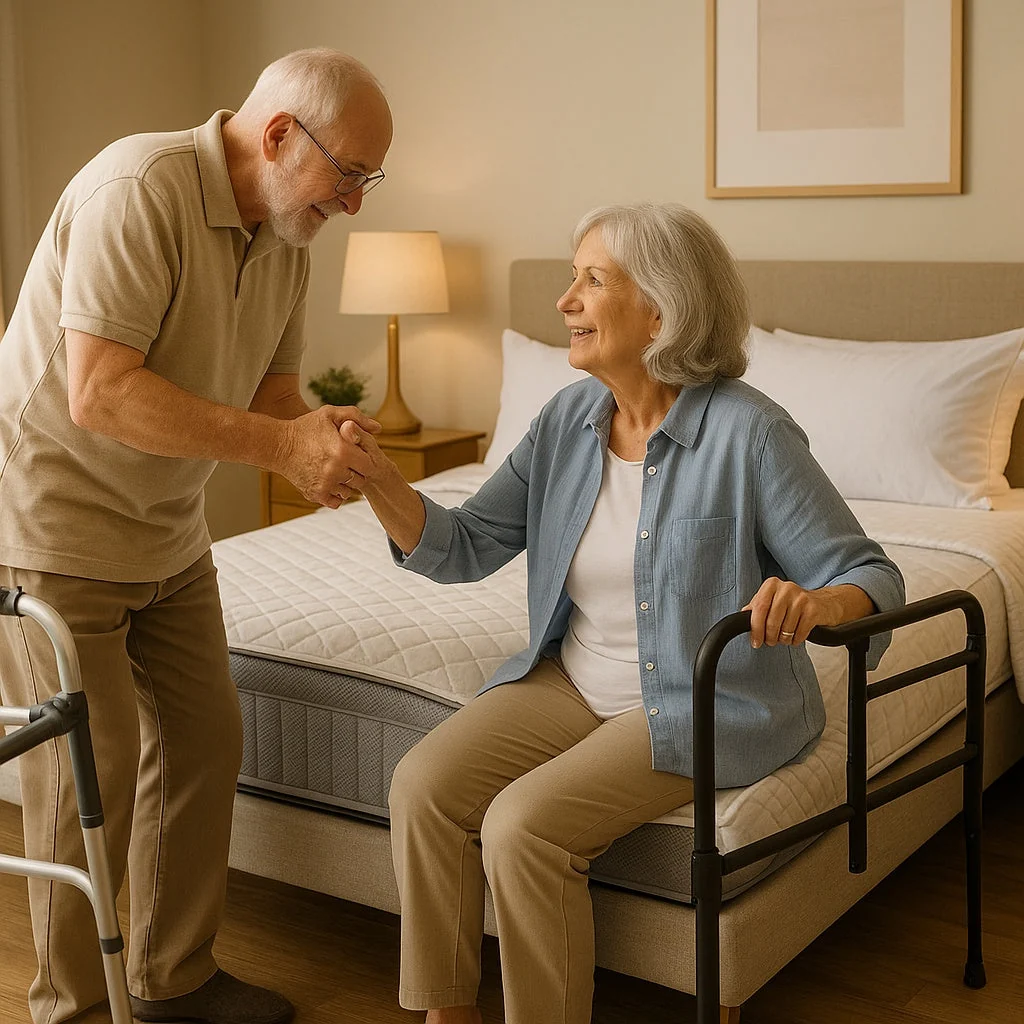
For a long time, “accessible furniture” meant one of two things: expensive medical equipment, or furniture that quietly signaled a health problem the moment guests walked in. That’s changing fast. As more older adults choose to stay in their own homes rather than move into retirement communities, furniture brands are finally catching up — designing pieces that support mobility and independence without looking like they belong in a rehab center.
Here’s what’s shaping aging-in-place furniture in 2026, why the category is growing so quickly, and how to shop it for yourself or a loved one.
Why Aging-in-Place Furniture Is Booming
This shift is being driven by a genuine demographic and cultural change, not a passing design trend. According to AARP, 77% of adults aged 50 and older express a strong desire to remain in their homes as they age, rather than move to a dedicated senior living facility. That preference is already reshaping the home renovation market: as of 2024, the 65-and-over population reached 61.2 million and continues to grow by more than 3% annually, while the under-18 population has actually started to shrink.
The impact on spending is significant. In 2003, adults over 65 accounted for just 14% of home renovation spending, while 35- to 44-year-olds made up 28%. By 2023, that had completely flipped — over-65 homeowners now account for roughly 27% of renovation spending, more than any other age group. Aging-in-place furniture and design upgrades have become one of the primary drivers of that shift, as homeowners invest in turning their current house into a safe, accessible “forever home” rather than planning to eventually move.
1. “Quietly Accessible” Design
The single biggest shift in this category is aesthetic, not functional. Furniture brands are increasingly designing accessible pieces that look residential rather than medical or institutional — the goal being furniture that supports independence without visually reminding someone that they’re managing a health limitation. This means accessibility features like larger drawer pulls, discreet grab points, and sturdy adjustable seating are being built into furniture that looks, at first glance, like any other well-designed piece in the home.
This matters more than it might seem. The target audience for this kind of furniture goes well beyond older adults planning for retirement — it includes people of any age with permanent or temporary disabilities, and anyone who wants to plan ahead for the future without compromising on how their home looks and feels today.
2. Fall-Prevention as a Design Priority
Falling is considered the most dangerous disabling accident for adults over 65, and many people never fully recover from a serious fall. As a result, a significant amount of aging-in-place furniture design in 2026 is specifically focused on making falls less likely — through sturdier construction, better-placed grab points, and seating designed to make standing up and sitting down safer and easier.
3. Correct Seat and Bed Height
Seat height has become one of the most closely considered specifications in aging-friendly furniture. Seats and sofas that are too low make standing up difficult, while seats that are too high leave feet dangling without support — either extreme increases fall risk and daily discomfort. Guidance in senior-focused furniture design generally recommends seat heights in the range of 17 to 19 inches, allowing someone to sit down and stand back up with minimal strain.
4. Lift Recliners and Motorized Mobility Support
Lift recliners have become a genuine staple in aging-in-place and assisted living furniture, using motorized mechanisms to help someone move from a seated to a standing position with far less physical effort. Beyond the core lift function, many current models add comfort features like heated seats and massage functions, which can help with circulation and ease discomfort associated with conditions like arthritis, making the furniture functional and genuinely comfortable rather than purely clinical.
5. Adjustable and Safety-Equipped Beds
Adjustable beds are playing a bigger role in aging-in-place design, offering position customization that can help manage a range of health conditions while supporting more restful, safer sleep. Safety features like bed rails and integrated lighting are increasingly built directly into these beds, helping reduce fall risk during nighttime movement without requiring separate, obviously medical add-ons.
6. Universal Design Principles Throughout the Home
Aging-in-place furniture increasingly follows universal design principles meant to work well for the widest possible range of users, not just older adults. Key features include furniture heights that accommodate people using mobility aids like wheelchairs, storage that’s reachable from a seated or standing position without excessive bending, and non-slip surfaces on seating and tabletops to reduce accident risk. Smooth edges and rounded corners are also a consistent theme, reducing injury risk for anyone with limited mobility, not just older adults.
7. Accessible Storage Redesign
Storage furniture is getting a meaningful rework for accessibility. Pull-out drawers are increasingly replacing deep, hard-to-reach cabinets, while lever-style hardware is replacing traditional knobs that can be difficult to grip for anyone with reduced hand strength. Clear storage containers with large-print labels are also becoming more common, making it easier to find items without close-up reading or guesswork.
8. Adjustable-Height and Modular Storage Systems
Beyond individual pieces, adjustable-height storage systems are gaining traction specifically because they eliminate the need for reaching or bending to access commonly used items. Modular shelving units that can be reconfigured as mobility needs change over time are also becoming more common, allowing a single storage system to adapt rather than needing to be replaced as circumstances shift.
9. Custom Cabinetry With Varied Counter Heights
In kitchens and other work surfaces, custom cabinetry with varied counter heights is becoming a meaningful aging-in-place upgrade, making it easier for everyone in a household to use the space comfortably whether sitting or standing. This kind of investment tends to pay off beyond daily convenience, too — homes with genuinely accessible kitchens and living spaces are increasingly seen as more valuable on resale, not just more livable in the near term.
How to Shop Aging-in-Place Furniture
- Check seat and bed height first. Aim for the 17–19 inch range for most seating, and make sure any bed allows for an easy, stable transition to standing.
- Prioritize sturdy construction over style alone. Furniture needs to support real weight-bearing use during transitions like sitting and standing, not just look sturdy.
- Look for discreet, not obvious, accessibility features. The best current options build in grab points, larger pulls, and adjustable elements without making the furniture look medical.
- Consider lift recliners for mobility challenges. They offer some of the most meaningful day-to-day independence gains of any single furniture purchase in this category.
- Think beyond seating. Storage height, drawer hardware, and lighting placement matter just as much as chairs and beds for reducing fall risk and daily strain.
Frequently Asked Questions
What furniture features matter most for fall prevention? Correct seat height (generally 17–19 inches), sturdy armrests, non-slip surfaces, and discreet grab points are among the most impactful features for reducing fall risk in daily furniture use.
Is aging-in-place furniture only for seniors? No — this furniture category is increasingly designed for anyone with a permanent or temporary mobility limitation, as well as people who want to plan ahead for future accessibility needs regardless of their current age.
Does accessible furniture have to look institutional? Not anymore. A growing number of mainstream furniture brands are specifically designing “quietly accessible” pieces that look residential and stylish while still including meaningful safety and mobility features.
Final Thoughts
Aging-in-place furniture in 2026 reflects a genuine shift in how accessibility is approached: not as a separate, clearly medical category, but as thoughtful design that happens to also support independence and safety. Between quietly accessible styling, fall-prevention-focused construction, and universal design principles that benefit a wide range of users, this category has moved well past the institutional-looking furniture of the past. Whether you’re planning ahead for your own future or furnishing a home for a loved one, the good news is that accessible no longer has to mean anything other than well-designed.
