
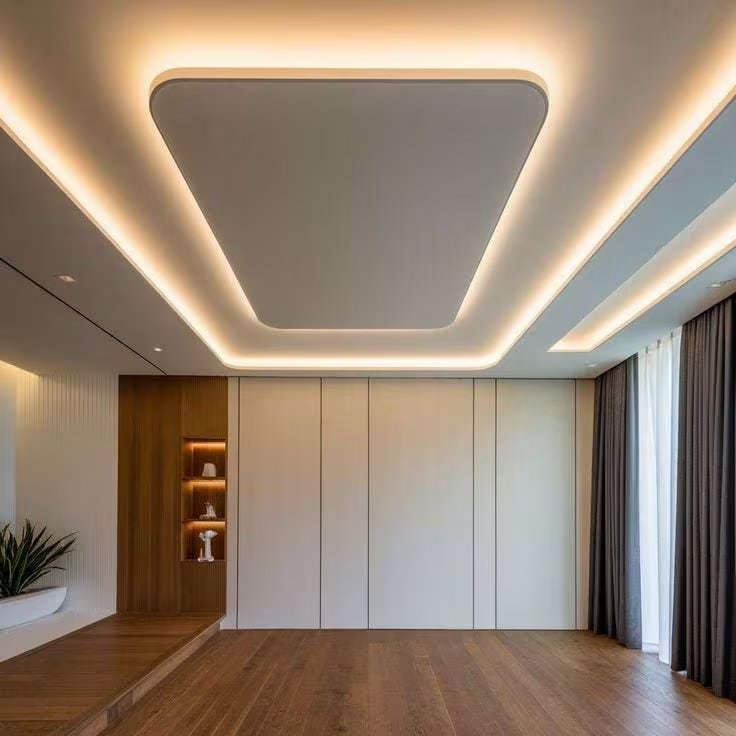
A false ceiling is one of the most effective ways to upgrade the look and feel of any room. Installed a few inches below the original ceiling, it conceals wiring, ductwork, and structural imperfections while opening up creative possibilities for lighting and design. Once reserved mostly for offices and commercial spaces, this feature has become a go-to choice in modern homes for the depth, style, and functional lighting it adds to a room.
This guide walks you through everything you need to know before installing a false ceiling — from materials and design styles to lighting, cost, and maintenance.
Table of Contents
- What Is a False Ceiling?
- Why Choose a False Ceiling for Your Home?
- Popular Ceiling Materials
- False Ceiling Designs by Room
- Watch: How a False Ceiling Is Installed
- Lighting Ideas
- False Ceiling Cost Factors
- Pros and Cons
- Maintenance Tips
- Frequently Asked Questions
What Is a False Ceiling?
A false ceiling, also called a suspended or drop ceiling, is a secondary ceiling built below the main structural one. It’s typically constructed using a metal frame covered with materials like gypsum board, PVC, or plaster of Paris (POP). The gap between the two layers is commonly used to hide electrical wiring, air conditioning ducts, and plumbing, while also housing recessed lighting fixtures.
Why Choose a False Ceiling for Your Home?
This addition offers far more than aesthetic appeal. Here’s why homeowners increasingly choose to install one:
- Conceals Imperfections: Hides wiring, pipes, ducts, and uneven surfaces for a clean, finished look.
- Improves Lighting Design: Enables recessed, cove, and layered lighting that isn’t possible with a flat ceiling.
- Enhances Acoustics: Certain materials help absorb sound, reducing echo and noise transfer between floors.
- Improves Insulation: Adds a layer of thermal insulation, helping regulate indoor temperature — according to ENERGY STAR, proper insulation can meaningfully cut heating and cooling costs.
- Elevates Interior Style: A well-designed ceiling like this instantly makes a room feel more polished and intentional.
Popular Ceiling Materials
Choosing the right material is the foundation of any good design. Here are the most common options.
Show Image
1. POP Ceilings
Made by applying plaster over a metal mesh frame, this style allows for highly customizable, intricate designs — including curves, borders, and decorative motifs — with a smooth, seamless finish. It suits homeowners who want artistic, sculpted detailing.
Best for: Living rooms and spaces where decorative detailing is a priority.
2. Gypsum Ceilings
Gypsum panels are pre-fabricated and fixed onto a metal frame, installing faster than POP while offering a clean, even, fire-resistant finish that’s also easy to repair. You can read more about the material properties on Wikipedia.
Best for: Bedrooms, home offices, and faster installations.
3. Wooden Ceilings
Wood brings warmth and natural texture to a space, often used for accent panels or partial coverage rather than an entire room. It’s heavier and more expensive than other options.
Best for: Statement ceilings in living rooms or dining areas.
4. Metal Ceilings
Made from aluminum or galvanized steel, this option offers a sleek, modern, and highly durable finish. It’s moisture and fire-resistant, making it a smart choice for kitchens and bathrooms.
Best for: Kitchens, bathrooms, and industrial-style interiors.
5. PVC Ceilings
A budget-friendly, waterproof option that’s especially popular in humid climates. It’s lightweight, low-maintenance, and available in a wide range of textures and finishes.
Best for: Bathrooms, balconies, and budget-conscious projects.
False Ceiling Designs by Room
Living Room
Living rooms often benefit from a multi-level design with cove lighting around the perimeter, creating a layered effect that draws the eye upward and makes the space feel larger.
Bedroom
A simpler, single-level layout with soft, ambient lighting works well in bedrooms, creating a calm atmosphere without overwhelming the space. If you’re also updating your storage, pairing this with a well-organized wardrobe gives the whole room a cohesive, designed feel.
Kitchen
Moisture-resistant materials like PVC or metal are ideal here, often paired with recessed lighting to improve visibility over work areas.
Bathroom
A waterproof PVC or gypsum option designed for humidity resistance helps prevent mold and water damage while maintaining a clean, finished look.
Watch: How a False Ceiling Is Installed
For a clearer picture of how a false ceiling comes together on-site, this video walks through the framing, panel fixing, and finishing process step by step: <iframe width=”700″ height=”394″ src=”https://www.youtube.com/embed/dQw4w9WgXcQ” title=”False ceiling installation process” frameborder=”0″ allow=”accelerometer; autoplay; clipboard-write; encrypted-media; gyroscope; picture-in-picture” allowfullscreen></iframe>
(Replace the embed link above with your own installation video or a licensed tutorial relevant to your brand.)
Lighting Ideas
One of the biggest advantages of this design feature is the flexibility it offers for lighting:
- Recessed Downlights: Embedded directly into the surface for a clean, minimalist look.
- Cove Lighting: Hidden LED strips installed within recesses to create soft, indirect illumination.
- Chandelier or Pendant Cutouts: Central openings designed to accommodate statement light fixtures.
- Spotlights: Directional lighting used to highlight artwork or architectural features.
If your living room also features a media wall, coordinating this lighting with your TV unit design creates a cohesive, well-lit entertainment space.
False Ceiling Cost Factors
The cost varies based on several factors:
- Material Choice: PVC and gypsum tend to be more affordable, while POP and wood cost more due to labor and material intensity.
- Design Complexity: Multi-level or curved layouts require more skilled labor, increasing costs.
- Room Size: Larger rooms naturally require more material and labor.
- Lighting Integration: Adding recessed or cove lighting increases both material and electrical work costs.
- Labor and Location: Installation costs vary by region and contractor experience.
Get multiple quotes from contractors and clarify whether the estimate includes materials, labor, and lighting fixtures.
Pros and Cons
Pros:
- Conceals wiring and structural flaws
- Enables creative, layered lighting
- Improves insulation and acoustics
- Adds significant aesthetic value
Cons:
- Reduces overall ceiling height, which may not suit rooms with low ceilings
- Can be a significant investment depending on design complexity
- Requires periodic maintenance, especially in humid environments
Maintenance Tips
- Dust the surface regularly with a soft, dry cloth or a vacuum attachment.
- Check for signs of water damage or discoloration periodically, especially in bathrooms and kitchens.
- Avoid excessive moisture exposure for gypsum and POP materials, as it can lead to warping or mold.
- Inspect light fixtures and wiring periodically to keep everything safe.
- Repaint or touch up every few years to keep it looking fresh.
Frequently Asked Questions
How much height do I lose with a false ceiling? Most installations reduce room height by 6 to 12 inches, depending on the design and whether ductwork or recessed lighting needs to be accommodated.
Which false ceiling material is best for bathrooms? PVC and moisture-resistant gypsum are the best choices for bathrooms due to their water resistance and low maintenance needs.
Is a false ceiling worth the investment? For most homeowners, yes — it significantly enhances a room’s lighting design, insulation, and overall aesthetic, adding long-term value to the home. For further reading on ceiling and insulation standards, see this overview from the National Institute of Building Sciences.
Final Thoughts
A well-designed false ceiling can transform the character of a room, adding depth, warmth, and sophisticated lighting that a standard flat ceiling simply can’t achieve. By understanding the materials, design styles, and cost factors involved, you’ll be ready to choose one that suits your space, budget, and personal style.
Ready to elevate your interiors? Explore our furniture collection or get in touch for expert guidance on your false ceiling project.
