
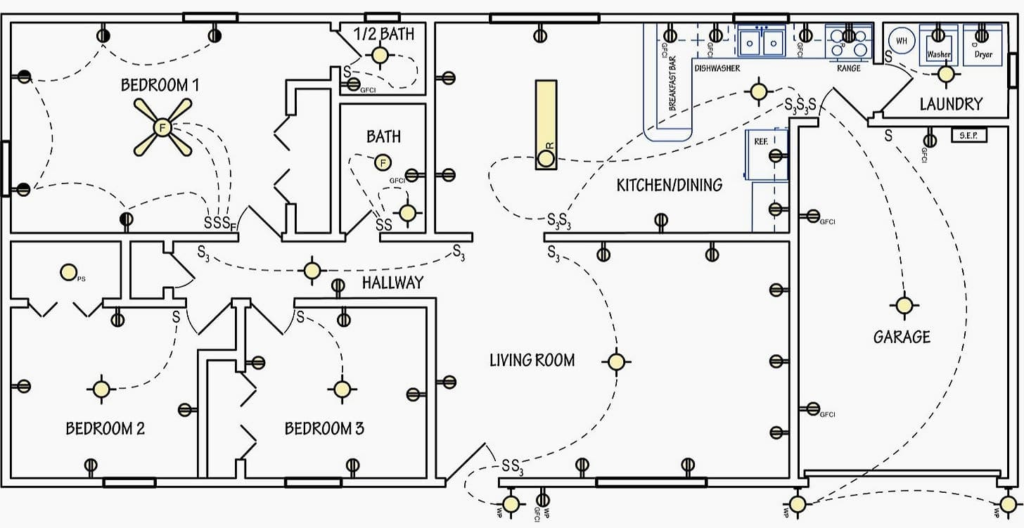
An electrical point is any location in a home wired to supply power — for a switch, socket, light, or appliance. Planning these points correctly, before walls are closed up during civil work, is one of the most important steps in any renovation or new build. Get it wrong, and you’re left with inconvenient switch placements, insufficient sockets, or costly rewiring down the line.
This guide covers the different types of electrical points, how many you need per room, placement best practices, and what affects the overall cost.
Table of Contents
- What It Is
- Why Planning Matters
- Types of Points You’ll Need
- How Many Points Per Room?
- Watch: Wiring It In
- Placement Best Practices
- Cost Factors
- Safety Tips
- Frequently Asked Questions
What Is an Electrical Point?
An electrical point refers to any wired outlet in a home — a switch, plug socket, light fixture connection, or dedicated appliance outlet — that draws power from the main circuit. Each one is connected back to the distribution board through conduit wiring laid during the civil and electrical rough-in stage, before walls are plastered and finished.
Why Planning Matters
Deciding on the number, type, and placement of every point early in the project avoids expensive problems later. Here’s why it deserves careful attention:
- Avoids Costly Rework: Adding or moving one after walls are finished means breaking into plaster and paint.
- Improves Daily Convenience: Well-placed switches and sockets near beds, desks, and kitchen counters make everyday life easier.
- Supports Future Needs: Planning ahead for appliances like ACs, water heaters, or home automation systems prevents overloading a single point later.
- Meets Safety Standards: Following recognized wiring standards, such as those outlined by the National Fire Protection Association, reduces fire and shock risks.
Types of Points You’ll Need
1. Light Points
These power ceiling lights, wall lights, and any fixture tied to a wall switch rather than a plug.
2. Switch Points
Wall-mounted switches that control lighting circuits, fans, or other fixed appliances.
3. Plug/Socket Points
General-purpose 5A or 15A sockets used for mobile chargers, lamps, and small appliances.
4. Power Points (High-Load)
Dedicated, higher-capacity connections for appliances like air conditioners, water heaters, microwaves, and washing machines.
5. Data and Network Points
Wiring for internet routers, Ethernet ports, and TV or set-top box connections, often planned alongside your TV unit design.
How Many Points Per Room?
While exact requirements vary by household, here’s a general guideline:
- Living Room: 4–6 plug points, 2–3 light points, 1–2 power points for a TV or entertainment setup.
- Bedroom: 3–4 plug points near the bed and desk, 1–2 light points, 1 power point for an AC.
- Kitchen: 4–6 plug points for appliances, 1–2 dedicated power points for heavy-load equipment.
- Bathroom: 1–2 points, ideally with waterproof covers and positioned away from direct water contact.
Watch: Wiring It In
This short walkthrough shows how a switch board and socket are wired and mounted during a typical renovation: <iframe width=”700″ height=”394″ src=”https://www.youtube.com/embed/dQw4w9WgXcQ” title=”Wiring an electrical point on a renovation site” frameborder=”0″ allow=”accelerometer; autoplay; clipboard-write; encrypted-media; gyroscope; picture-in-picture” allowfullscreen></iframe>
(Replace the embed link above with your own installation video or a licensed tutorial relevant to your brand.)
Placement Best Practices
- Switches Near Entry Points: Place light switches close to doorways for easy access when entering a room.
- Sockets at Usable Heights: Plan sockets around furniture placement — behind a bed, beside a desk, or above a kitchen counter — rather than a fixed generic height.
- Dedicated Circuits for Heavy Appliances: ACs, geysers, and kitchen appliances should each have their own circuit to avoid overloading.
- Group by Function: Cluster switches for a room near the main entry rather than scattering them across multiple walls.
Cost Factors
The cost of wiring and installing electrical points depends on:
- Number and Type: High-load power points cost more than standard switch or plug points.
- Wiring Complexity: Longer conduit runs or additional circuits increase material and labor costs.
- Fixture Quality: Switch and socket plate quality — from basic to modular, branded options — affects pricing.
- Labor and Location: Rates vary by region and electrician experience.
Always get a detailed quote listing the number of points, wiring gauge, and any additional distribution board work included.
Safety Tips
- Use certified electricians for all wiring and point installation.
- Never overload a single socket with multiple high-power appliances via extension boards.
- Install waterproof or moisture-resistant points in kitchens and bathrooms.
- Label your distribution board clearly so each circuit is easy to identify during maintenance.
- Schedule periodic inspections, especially in older homes, to catch worn wiring before it becomes a hazard.
Frequently Asked Questions
How many electrical points does a typical bedroom need? Most bedrooms need around 3–4 plug points, 1–2 light points, and one dedicated power point for an air conditioner, though this varies by household needs.
Can I add an electrical point after renovation is complete? Yes, but it typically requires breaking into walls or running surface-mounted conduit, which is more disruptive and costly than planning it during the initial wiring stage.
What’s the difference between a plug point and a power point? A plug point is a general-purpose, lower-capacity socket for everyday devices, while a power point is a dedicated, higher-capacity connection built for heavy appliances like ACs or water heaters.
Final Thoughts
Thoughtful electrical point planning — done early and alongside your civil work — saves you from inconvenient layouts, safety risks, and expensive rework later. Mapping out your needs room by room, before wiring is finalized, ensures your home is both functional and future-ready.
Planning your wiring layout? Get in touch for expert guidance on mapping out every electrical point in your home.
