
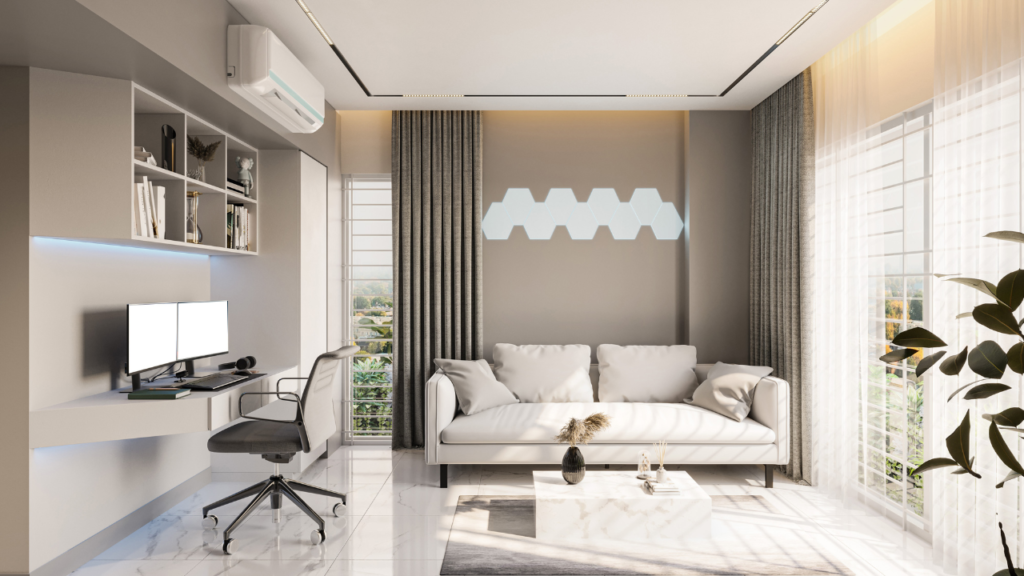
Renting comes with real furniture constraints: no permanent fixtures, uncertain move timelines, and the ever-present question of whether a piece will fit in the next place. Those constraints push a lot of renters toward the same flat-pack basics — furniture chosen for convenience rather than character, because it feels safer to invest in something forgettable than something you might have to abandon at the next move.
But renting doesn’t have to mean basic. With a few adjustments to how you shop, distinctive furniture can be just as practical for a rental as for a permanent home — arguably more so, since it’s designed from the start to move with you.
Prioritize Furniture That Travels Well
The biggest practical difference between furnishing a rental and a permanent home is portability. Before falling for a piece, it’s worth asking whether it can realistically survive a move — because renters move more often than homeowners, and furniture that can’t handle disassembly and transport becomes a liability rather than an asset.
Furniture that tends to move well:
- Solid wood pieces with simple, sturdy joinery rather than fragile glued composite construction
- Modular seating that can be broken into smaller sections for tight stairwells or doorways
- Furniture with removable legs, which simplifies both transport and storage
- Lightweight metal-frame pieces, which are easier to carry than heavy upholstered furniture
Furniture that tends to struggle with moves:
- Oversized sectionals that may not fit through doorways or around stairwell corners in a new space
- Delicate veneer pieces prone to chipping during transport
- Anything requiring professional disassembly and reassembly, unless you’re confident you’ll use professional movers each time
Freestanding Storage Instead of Built-Ins
Renters generally can’t install built-in shelving, cabinetry, or closet systems — but freestanding versions of the same concept can offer nearly identical function while remaining fully portable.
- A tall, freestanding bookshelf can provide the visual impact of built-in shelving without any permanent installation
- A wardrobe or armoire can substitute for closet built-ins in older rental units with limited closet space
- Modular shelving systems, which can be reconfigured to fit different wall dimensions from one apartment to the next, offer more long-term flexibility than fixed-size units
These freestanding alternatives also tend to hold resale value better than built-ins, since they can be sold or moved rather than left behind for a landlord.
Rugs, Lighting, and Textiles Do Heavy Lifting in Rentals
Since renters often can’t paint walls, replace flooring, or make other permanent changes, furniture-adjacent elements end up carrying a disproportionate share of the design work.
- A large, well-chosen rug can visually redefine a space far more than a coat of paint could, and comes with you at every move
- Statement lighting — floor lamps, table lamps, and plug-in pendant fixtures that don’t require rewiring — can transform a plain rental ceiling without any electrical work
- Curtains, if allowed, are one of the highest-impact, lowest-cost upgrades available, softening standard rental blinds and adding both color and texture
These elements are also relatively inexpensive compared to furniture, making them a smart place to take more design risks.
Renter-Friendly Ways to Add Character Without Violating a Lease
Beyond furniture itself, a few adjacent strategies help distinctive style translate into rental-appropriate execution:
- Removable wallpaper and decals can add pattern and color to an accent wall without the commitment or damage of paint
- Command strips and tension rods allow for hanging art, curtains, or even light shelving without drilling
- Furniture risers or casters can adjust a piece’s height or add mobility without any permanent modification to the piece or the space
Buying Secondhand Makes Even More Sense for Renters
The case for secondhand and vintage furniture, already strong for budget and sustainability reasons, is especially compelling for renters. Since rental furniture may need to be resold or given away at a future move, buying secondhand in the first place — and reselling when you move — creates a lower-cost, lower-waste cycle than repeatedly buying and discarding new furniture with each relocation.
Well-built secondhand furniture also tends to hold its resale value better than cheap new furniture, meaning a piece bought secondhand for a first apartment can often be resold for a similar price when it’s time to upgrade, rather than losing most of its value the way disposable new furniture typically does.
Renting Doesn’t Mean Renting Forever — Buy With the Future in Mind
One mistake renters sometimes make is under-investing in furniture on the assumption that it’s temporary, then repeating that pattern every one to two years across several moves — spending more in total on a series of short-lived pieces than a single well-chosen piece would have cost.
If you can reasonably predict staying in a general style or space type for the next several years, even across different specific units, investing in a few higher-quality, distinctive pieces up front tends to pay off — both financially and in how much more the space feels like home in the meantime.
A Home in Progress, Not a Home on Hold
Renting can create a mindset of treating a home as temporary and therefore not worth real investment. But most renters spend years, sometimes over a decade, moving between rentals before owning — which makes “waiting until you own a home” to build a distinctive space a much longer wait than it might seem.
Choosing portable, well-built, characterful furniture allows a rental to feel genuinely like home now, while ensuring that investment moves with you rather than getting left behind at each new lease.
