
Furniture feels so ordinary today that it’s easy to forget it wasn’t always this way. For most of human history, sitting on the floor, sleeping on woven mats, and eating off low surfaces was completely normal. The chair you’re sitting on right now, the table nearby, the bed you’ll sleep in tonight — each of these objects has a surprisingly long, culturally rich backstory that says as much about power, status, and daily life as it does about design.
This is a journey through that history — not just what furniture looked like across the centuries, but why it changed, and what those changes reveal about the societies that created it.
Furniture as a Symbol of Power, Not Comfort
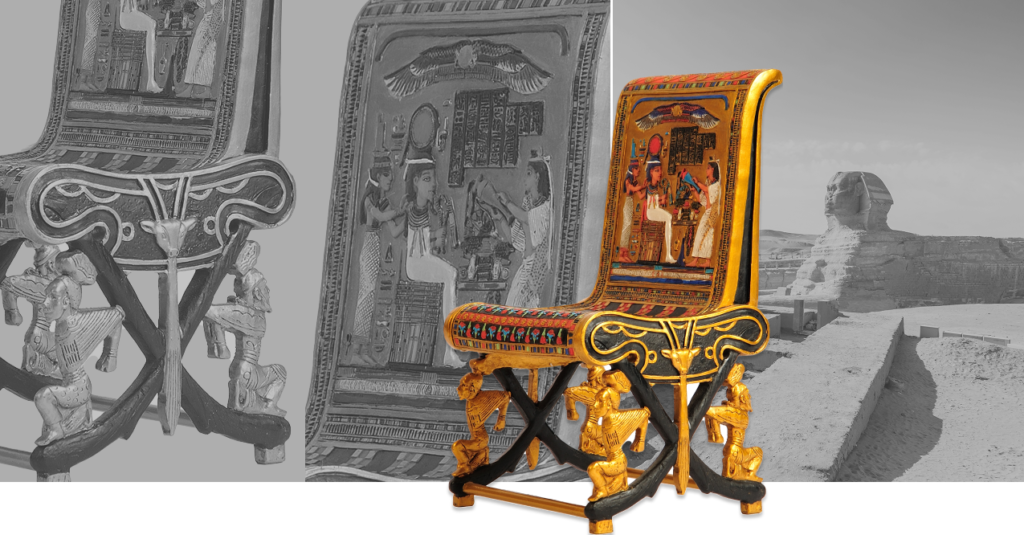
In the earliest civilizations, furniture wasn’t designed for everyone — it was designed for the few. In Ancient Egypt, elaborately carved wooden chairs, footstools, and beds were reserved almost exclusively for royalty, nobility, and the wealthy elite. Ordinary people sat and slept on mats, low stools, or simply the ground.
This pattern repeated across ancient civilizations. In Ancient Greece and Rome, the klismos chair — a curved-back seat with tapering legs — became closely associated with status and refinement, appearing frequently in art depicting gods, philosophers, and the upper class. Meanwhile, common seating for the working population remained simple benches or stools, if furniture was used at all.
The underlying message across nearly every ancient culture was consistent: how much furniture you owned, and how elaborate it was, directly signaled your social rank. Furniture wasn’t just functional — it was a visible marker of hierarchy.
The Medieval Shift: Furniture Becomes Functional, Not Just Symbolic
During the medieval period in Europe, furniture took on a more practical, though still status-conscious, role. Castles and wealthy households used heavy, solid wood furniture — large trestle tables, high-backed chairs, and elaborately carved chests — both for function and to project the owner’s wealth and permanence.
Interestingly, most furniture during this era was designed to be portable. Nobility frequently moved between estates, so tables, benches, and even beds were often built to be disassembled and transported. The idea of furniture as fixed, permanent household fittings wouldn’t fully take hold until later centuries, when homeownership and settled living became more common across broader parts of the population.
For the general population during this time, furniture remained minimal — simple stools, basic wooden chests, and straw-filled mattresses were standard, while chairs specifically remained a luxury largely reserved for heads of households or guests of honor. This is actually where the phrase “chairman” originates — quite literally, the person who sat in the chair held authority.
The Renaissance: Furniture Becomes an Art Form
The Renaissance period brought a dramatic shift in how furniture was designed and perceived. As art, architecture, and craftsmanship flourished across Europe, furniture-making evolved from purely functional carpentry into a genuine decorative art form.
Elaborate carving, inlay work, and increasingly sophisticated joinery techniques transformed furniture into a canvas for artistic expression. Wealthy households commissioned furniture with the same care given to paintings or sculpture, and skilled furniture makers gained recognition as artisans in their own right, rather than simply tradesmen.
This period also saw the emergence of specialized furniture pieces designed for specific purposes — writing desks, dedicated dining tables, and more elaborate seating arrangements began appearing as households grew more complex and social customs around dining, entertaining, and daily life became more formalized.
The 18th and 19th Centuries: Furniture Becomes a Craft Movement
The 1700s and 1800s marked a golden era of furniture craftsmanship, particularly in Europe. Distinct furniture styles emerged and spread, often named after the designers or eras that popularized them — refined, elegant designs characterized this period, with an increasing focus on proportion, comfort, and detailed craftsmanship.
This era also saw furniture-making become increasingly specialized as a profession, with skilled cabinetmakers building reputations around specific techniques, materials, and signature styles. Furniture pattern books began circulating widely, allowing designs to spread and be replicated across different regions and skill levels, gradually making well-crafted furniture more accessible beyond the aristocracy.
Meanwhile, the Industrial Revolution began fundamentally changing how furniture was produced. Mechanized manufacturing processes made furniture production faster and cheaper, gradually shifting furniture from a purely handcrafted luxury toward something increasingly accessible to a growing middle class.
The 20th Century: Furniture Meets Mass Production and Modernism
The 20th century transformed furniture more radically than any prior era, driven by two major forces: mass production and modernist design philosophy.
Early in the century, the Bauhaus movement in Germany championed a radical idea — that furniture design should prioritize function and simplicity over ornamental tradition. This philosophy directly challenged centuries of increasingly elaborate, decoration-heavy furniture styles, favoring clean lines, functional materials, and forms dictated by purpose rather than status display.
Mid-century modern design, emerging strongly in the decades following World War II, built on this philosophy while embracing new materials — molded plywood, plastic, and tubular steel — that had previously been impossible or impractical for furniture-making. This era prioritized accessibility and functionality, aligning with a growing middle class that wanted stylish, comfortable furniture without the cost or exclusivity of hand-carved, traditional pieces.
Mass production techniques, combined with these design philosophies, fundamentally shifted furniture from a status symbol reserved for the wealthy into something genuinely accessible to average households — a shift with few true parallels in furniture’s several-thousand-year history.
Furniture Across Cultures: More Than a European Story
While much of furniture’s documented design history centers on European developments, furniture traditions across other cultures evolved along entirely different, equally rich paths.
In many East Asian cultures, particularly traditional Japanese homes, furniture historically remained minimal by design — low tables, floor cushions, and sliding partitions reflected a cultural emphasis on flexible, multi-purpose living spaces rather than fixed, furniture-heavy rooms. This approach wasn’t a lack of development; it was a distinctly different design philosophy prioritizing openness and adaptability.
In parts of the Middle East and North Africa, low seating arrangements, ornately woven textiles, and intricately carved wooden furniture reflected both climate considerations and rich decorative traditions, often blending function with elaborate craftsmanship in distinctly regional styles.
Across many South Asian and African cultures, furniture historically balanced portability, climate adaptation, and communal living patterns — woven stools, low platforms, and modular seating reflected lifestyles built around flexibility and shared spaces rather than fixed, single-purpose furniture arrangements common in Western design history.
Understanding this broader picture matters because it reframes furniture history not as a single linear progression, but as multiple parallel traditions, each shaped by distinct cultural values, climates, and ways of living.
What Furniture History Reveals About Modern Design
Looking back across this long history reveals something genuinely useful for how we think about furniture today: nearly every major shift in furniture design followed a shift in how people actually wanted to live — not the other way around.
Ancient status furniture reflected rigid social hierarchies. Medieval portable furniture reflected mobile, less-settled lifestyles. Renaissance artistic furniture reflected growing wealth and cultural sophistication. Modernist furniture reflected a desire for accessibility and simplicity following centuries of ornamental excess.
Today’s furniture trends — multi-functional pieces, sustainable materials, minimalist design — follow this same pattern, reflecting current priorities around limited space, environmental awareness, and flexible, fast-changing lifestyles.
Final Thoughts: Furniture as a Mirror of Its Time
Furniture has never really been just about function. Across thousands of years and countless cultures, the way people design, build, and arrange furniture has consistently mirrored deeper truths about their society — who held power, how people moved through the world, what they valued, and how they wanted to live.
The next time you sit down at your desk or dining table, it’s worth remembering: that simple act of sitting on a raised chair, at a dedicated table, was once a privilege reserved for the very few. Furniture’s long journey from symbol of status to everyday necessity is, in many ways, a quiet reflection of how far human daily life has evolved.
